Testosterone Supplements for Men: The Side Effects Nobody Puts on the Front of the Bottle
Quick Answer: What Are the Side Effects of Testosterone Supplements for Men?
Testosterone supplements for men can cause side effects, and they vary by ingredient. The commonest are digestive — excess zinc triggers nausea and depletes copper. Stimulant-type or adaptogenic herbs may raise heart rate or disturb sleep, some botanicals interact with medication, and the most serious risk is adulteration with hidden prescription drugs.
- Nutrient overload: too much zinc causes nausea and long-term copper depletion.
- Herb effects: stimulant-type ingredients can raise heart rate or spoil sleep.
- The big one: the FDA warns many mass-market pills hide undeclared drug ingredients.

The objection is reasonable, and it is the one that stops most careful buyers at the checkout: are testosterone supplements for men actually safe, or am I about to trade a bit of fatigue for a new set of problems? It is a fair question, and the marketing rarely answers it honestly because "here is what could go wrong" does not sell as well as "unleash your peak self." So this piece does the unglamorous thing and walks through the real side effects, ingredient by ingredient, along with the one risk that is genuinely serious and the simple filters that avoid it. The goal is not to scare you off the category. It is to make sure that if you do buy something, you buy the kind of product whose downside is a mild stomach and not a hospital visit.
First, why "side effects" depends entirely on what is inside
There is no single thing called a testosterone supplement, so there is no single side-effect profile. The label is a marketing category, not a defined formula, and two products carrying the same promise can share almost nothing. One might be a plain zinc-and-vitamin-D capsule with the risk profile of a multivitamin; the next a nine-herb blend with a hormone precursor tucked into the list. We break down that whole spectrum in our overview of what the testosterone booster category actually covers, and the short version matters here: you cannot assess safety from the front of the bottle, only from the panel on the back.
That is why the useful way to read this article is not "are these dangerous, yes or no" but "which specific ingredient carries which specific caution, and is it in the product I am looking at, at what amount." Everything below is organised that way.
The nutrient side effects: when more is not better
Start with the minerals and vitamins, because they are the ingredients most people assume are risk-free and they are not, above a point. Zinc is the clearest example. It is genuinely useful for men who are deficient — it is required for testosterone synthesis and sperm production — but it has a tolerable upper intake level of 40 milligrams a day for adults. Push past that and the short-term effect is nausea, a metallic taste and stomach upset; the long-term effect is copper depletion, because zinc and copper compete for absorption. The sneaky part is stacking: a man taking a men's formula on top of a multivitamin and a separate mineral supplement can cross 40 milligrams without ever swallowing a single high-dose product.
Vitamin D behaves similarly. It is fat-soluble, which means it accumulates rather than flushing out, and it carries an upper limit of 100 micrograms (4,000 IU) a day for most adults. Correcting a real deficiency is worthwhile; megadosing on the theory that if some is good, more is better, is how people end up with high blood calcium. The principle across the nutrient half of these products is the same: they are fix-the-gap ingredients, valuable when you are short and pointless-to-harmful when you are not. This is one of several reasons the sensible move is a test before a stack, a theme we return to in our guide to low testosterone symptoms in men over 40 and when to get tested.
The herb side effects: sleep, heart rate and interactions
The botanical half of these formulas brings a different set of cautions. Adaptogenic and stimulant-type herbs are the usual culprits behind the two complaints buyers report most: a raised or pounding heart rate and disturbed sleep. Some men are simply sensitive to the mild stimulating effect of certain extracts, and taking the capsules late in the day makes a restless night more likely. Neither is dangerous for most people, but both are real, and both are easy to reduce by dosing in the morning and starting with a single capsule rather than a loading dose.
Interactions matter more than jitters. Ginkgo, common in these blends, may add to the effect of anticoagulant and antiplatelet medicines — a conversation to have with a prescriber, not a reason to panic. Ashwagandha has been associated with rare cases of liver injury and is generally avoided by people with thyroid disease or on thyroid medication without medical advice. Panax ginseng can interact with several drug classes and may affect blood sugar. None of these is a reason to treat every herb as hazardous; they are reasons to know what is in your specific product and to run it past a clinician if you take anything regularly.
Most herbal side effects are mild and manageable. The exception is not a side effect at all — it is what happens when the pill contains something the label never declared.
Want a formula you can actually vet?
The safest products are the transparent ones: named nutrients, sensible amounts, and a manufacturer you can buy from directly instead of an anonymous marketplace listing. Erexafil publishes its full panel so you can weigh it against the cautions on this page.
Check Availability & PricingThe side effect that actually matters: adulteration
Here is the risk that dwarfs everything above, and it is the reason this whole category needs a careful buyer. The FDA has repeatedly warned that a substantial number of mass-market "male enhancement" and sexual-performance pills are adulterated — meaning they contain undeclared prescription drug ingredients, most often sildenafil or tadalafil analogues, the active compounds in erectile-dysfunction medicines. These are not on the label. They are added precisely because they produce a fast, obvious effect that a genuine botanical cannot, which is what lets a product sold as "natural" feel like it "works" within an hour. That speed is the tell, and it is the single most useful heuristic in the category: our guide to which male enhancement pills actually work explains why anything producing a drug-like effect within the hour is far more likely to contain a drug than a herb.
The danger is specific and serious. Those hidden drugs interact dangerously with nitrates prescribed for heart conditions and can cause blood pressure to drop to unsafe levels. A man avoiding his doctor precisely because he is embarrassed is the exact person most likely to be taking a nitrate and least likely to know he just swallowed an interacting drug. This risk concentrates in one identifiable corner of the market: single-dose "immediate results" products, often sold at gas stations, in convenience stores or through anonymous online marketplace listings of uncertain origin. It is far less associated with daily, disclosed-dose formulas bought from a manufacturer's own store.
Which gives you the single most protective rule in this whole article: be suspicious of speed. A supplement that promises a same-day, drug-like effect is either overpromising or, worse, delivering that effect through something it never declared. Real botanical formulas work gradually over weeks, which is less exciting and considerably safer.
| Risk | Where it comes from | How to reduce it |
|---|---|---|
| Nausea, copper depletion | Excess zinc, often from stacking products | Keep total zinc under 40 mg/day; check every label you take |
| Vitamin D excess | Fat-soluble, accumulates over time | Stay under 100 mcg/day unless a doctor directs otherwise |
| Raised heart rate, poor sleep | Stimulant-type or adaptogenic herbs | Dose in the morning; start with one capsule |
| Drug interactions | Ginkgo, ashwagandha, ginseng vs medication | Clear it with a prescriber if you take anything regularly |
| Hidden drug ingredients | Adulterated "fast-acting" male-enhancement pills | Avoid same-day-effect products; buy from the maker, not a marketplace |
| Hormonal effects | DHEA, a hormone found in some blends | Read for DHEA; avoid if drug-tested or hormone-sensitive |
Answering the objections directly
"They are natural, so how bad can they be?" Natural is not a safety argument. Plenty of plants are pharmacologically active, which is the entire reason herbs get used in the first place, and active means it can interact and it can overshoot. The nutrient side of these products can also be overdone precisely because minerals feel harmless. Judge a product by its ingredients and amounts, not by the word "natural" on the front.
"If it were unsafe, it could not be sold." Supplements are not reviewed for effectiveness or pre-cleared for safety the way drugs are; regulators mostly act after problems appear on the market. That is exactly why the adulteration warnings exist — the FDA is flagging products that were already on shelves. "Available for purchase" is a much weaker signal than most buyers assume.
"I take medication, so I will just try it and see." This is the scenario the whole article is built to prevent. The interaction risks above — blood thinners with ginkgo, nitrates with hidden erectile-drug analogues, thyroid medication with ashwagandha — are precisely the situations where "try it and see" goes wrong. If you take anything regularly or manage a condition, the five-minute conversation with a pharmacist or doctor is the cheapest insurance you will ever buy.

How to choose the lower-risk end of the shelf
Put the cautions together and a short checklist falls out. Favour products with third-party testing and fully disclosed amounts, because a blend that hides its doses also hides whether it respects the zinc ceiling. Buy from the manufacturer's own store rather than an anonymous marketplace, which removes most of the adulteration risk in one move. Read for DHEA, a hormone that is banned in most sport and restricted in several countries, and skip it if you are drug-tested or manage a hormone-sensitive condition. Avoid anything promising an immediate effect. And match the product to a real need — ideally confirmed by a test — rather than buying on a symptom that could have a dozen causes.
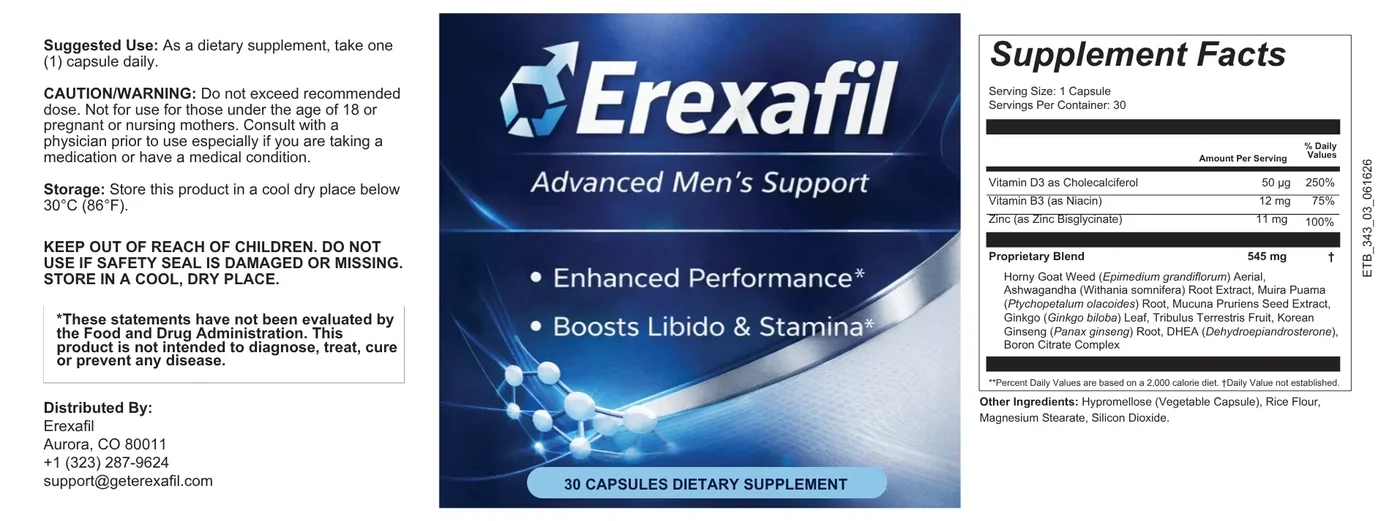
Applied to the Erexafil formula, that checklist is a mixed but honest picture, and we would give the same read to any competitor. In its favour: the named nutrient amounts are printed and sensible, with zinc at 11 milligrams sitting well under the 40-milligram ceiling, and it is a daily, gradual formula sold through the manufacturer rather than a fast-acting gas-station pill. The caution we would flag on any product like it: it contains DHEA in its botanical blend, which is a hormone, so it belongs in the "read the label and ask a clinician" group for anyone on medication, subject to drug testing, or managing a hormone-sensitive condition. That is not a knock unique to this product; it is the standard of honesty the whole category should be held to.
Medical note: this article is general information, not medical advice, and nothing here is a claim to diagnose, treat, cure or prevent any disease. Speak to a healthcare professional before starting any supplement, especially if you take medication or have a heart, blood-pressure, liver, thyroid or hormone-sensitive condition — and note that products in this category, including Erexafil, can contain DHEA, a hormone.
Scientific references
- NIH Office of Dietary Supplements — Zinc Fact Sheet for Health Professionals
- NIH Office of Dietary Supplements — Vitamin D Fact Sheet for Health Professionals
- FDA — Tainted Sexual Enhancement and Energy Products
- NIH NCCIH — Ashwagandha: Usefulness and Safety
- Mayo Clinic — Testosterone therapy: potential benefits and risks as you age
Related reading
Frequently asked
What are the side effects of testosterone supplements for men?
It depends on the ingredients, because the category is not one product. The most common issues are digestive: too much zinc can cause nausea and stomach upset, and chronic excess depletes copper. Stimulant-type or adaptogenic herbs may raise heart rate or disturb sleep in sensitive people. Some botanicals interact with medication, such as ginkgo with blood thinners. And the most serious risk is not the herb at all but adulteration, where mass-market male-enhancement pills are found to contain hidden pharmaceutical drug ingredients.
Can testosterone boosters cause high blood pressure or insomnia?
Some can, indirectly. Products that include stimulant-type ingredients, high-dose adaptogens or hidden pharmaceutical adulterants may raise heart rate, nudge blood pressure or disturb sleep in sensitive users, and taking them late in the day makes insomnia more likely. A clean, transparent formula at label doses is far less likely to do this than a fast-acting product of uncertain contents, but anyone with hypertension or a heart condition should clear a supplement with their doctor first.
Are over-the-counter testosterone supplements safe?
Most well-formulated products are well tolerated at label amounts, but safety is not guaranteed by the category. Supplements are not reviewed for effectiveness before sale, and the FDA has repeatedly warned that some mass-market male-enhancement pills are adulterated with undeclared prescription drug ingredients. The safest approach is to choose third-party-tested products with fully disclosed doses, buy from the manufacturer rather than an anonymous marketplace listing, and avoid anything promising immediate, drug-like results.
Who should avoid testosterone-boosting supplements?
Anyone taking regular medication or managing a health condition should speak to a doctor before starting one, and some people should avoid them altogether. That includes men on blood thinners or blood-pressure medication, those with a heart, liver, thyroid or hormone-sensitive condition, anyone with a history of hormone-related cancer, and competitive athletes subject to drug testing, since some formulas contain DHEA, a banned hormone. These products are also not appropriate for anyone under 18.
Choose transparency over hype
Erexafil is a once-daily men's capsule with its named nutrient amounts on the panel and a manufacturer-direct store — the transparent end of the shelf described above. If you want something you can vet against these safety points, the official store lists the current options and the full label.
See Erexafil on the Official Store