Low Testosterone Symptoms Men Over 40 Miss: The Non-Sexual Signs That Get Overlooked
Quick Answer: What Are the Low Testosterone Symptoms Men Over 40 Miss?
The low testosterone symptoms men over 40 notice first are often not sexual at all. Beyond low libido and weaker erections, the missed signs are fatigue that sleep does not fix, brain fog, low motivation, belly-fat gain and poor gym recovery. Diagnosis needs two morning blood tests, with under 300 ng/dL considered low.
- The obvious signs: reduced libido and erectile changes.
- The missed signs: fatigue, brain fog, low drive, visceral fat, slow recovery, flat mood.
- The next step: a morning blood test, not a self-diagnosis or a guess.

If you are past 40 and something feels off — the energy that used to be automatic now takes effort, the workouts do not stick the way they did, the motivation that once got you out of bed has gone quiet — you are not imagining it, and you are not alone in wondering whether hormones are involved. Low testosterone symptoms in men over 40 are common, genuinely under-recognised, and easy to mistake for "just getting older." The frustrating part is that the signs men actually look for are the ones that show up last, while the earliest signals get waved away as stress or a bad month. This guide is about spotting the full picture, understanding what a blood test would need to show, and knowing where a supplement fits and where it very much does not.
Why the decline is real but slower than the hype suggests
First, the biology, because it sets realistic expectations. Testosterone in men peaks in early adulthood and then declines gradually — by roughly 1 percent a year from the 30s and 40s onward. That is a slow drift, not a cliff. It is why the word "manopause," borrowed from the far more abrupt hormonal change women experience, is a little misleading: there is no sudden switch, just a gentle downward slope that most men barely notice year to year.
Two things follow from that. One, a slowly falling number does not automatically cause symptoms; plenty of men in their 50s feel fine on a level that would have been called low for a 25-year-old. Two, when a man over 40 does have a cluster of clear symptoms alongside a genuinely low blood level, that combination is worth investigating rather than dismissing as the inevitable tax of ageing. Age explains a trend. It does not explain away a specific low result with symptoms attached, and treating "you're just getting older" as the end of the conversation is how a treatable cause goes unnoticed.
The signs everyone expects — and the ones they miss
Ask most men what low testosterone looks like and they will name the sexual symptoms: reduced libido and erectile difficulty. Those are real and they matter. But they are frequently not the first to appear, and fixating on them means the earlier, quieter signals get attributed to everything except hormones. The non-sexual symptoms are the ones this article most wants you to notice, because they are the ones that get missed.
Persistent fatigue is the classic. Not the ordinary tiredness of a busy week, but a flatter, heavier lack of energy that a full night's sleep does not reset. Alongside it, men describe brain fog and trouble concentrating, a noticeable drop in motivation and competitive drive, and a mood that has gone dull or irritable rather than dramatically depressed. Physically, the tells are gradual gain of belly fat despite no real change in diet, loss of muscle and strength, and recovery from exercise that takes days longer than it used to. Poorer sleep and, over time, reduced bone density round out the list. None of these is proof on its own — that is exactly the point — but as a cluster, in a man over 40, they are a reason to test rather than to guess.
| Category | Commonly recognised | Commonly missed |
|---|---|---|
| Sexual | Lower libido, weaker or less frequent erections | Fewer spontaneous morning erections |
| Energy & mind | — | Fatigue sleep won't fix, brain fog, low motivation, flat mood |
| Body composition | — | Belly-fat gain, muscle and strength loss, slow recovery |
| Other | — | Disturbed sleep, lower bone density over time |

What "low" actually means on a blood test
Because the symptoms are non-specific, the only way to know whether testosterone is genuinely part of your picture is to measure it. This is not a number you can feel your way to. Testosterone follows a daily rhythm and peaks in the morning, so the test is done early in the day — and because a single reading can be misleading, diagnosis relies on two separate morning blood tests rather than one.
On the numbers, a total testosterone below roughly 300 ng/dL, confirmed on repeat testing and paired with symptoms, is generally treated as low. For context, healthy men in their 40s often sit somewhere in the 400 to 500 ng/dL range or above. Notice the two-part logic: a low number without symptoms and clear symptoms without a low number are both common, and neither on its own equals a diagnosis. A clinician looks at the pair together, and will often check related markers too, because the goal is to find the cause rather than just label the level.
The symptoms tell you to test. The morning blood test tells you whether testosterone is actually the story — or whether something else is.
Supporting everyday vitality while you sort out the cause
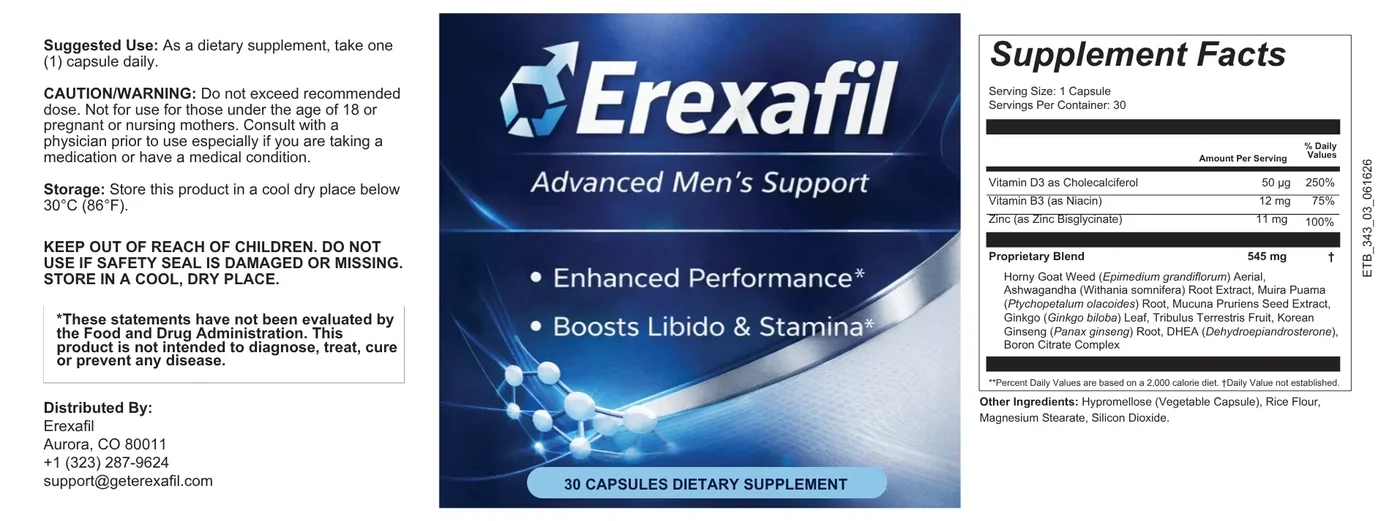
Getting tested is step one. Alongside that, some men choose a daily formula to support everyday energy and drive with researched nutrients and botanicals. Erexafil lists its full panel and amounts on the official store so you can see exactly what is inside.
Check Availability & PricingWhy testing beats self-treating — and what else it could be
Here is the single most important idea in this article, and it is the reason we lead with testing rather than shopping. The symptoms of low testosterone overlap almost perfectly with the symptoms of several other conditions, some of them serious. Fatigue, low drive, weight gain and low mood are also how thyroid disease, depression, poorly controlled diabetes, sleep apnoea and the side effects of common medications present. Erectile difficulty in particular can be an early warning sign of cardiovascular disease, because the small blood vessels involved show trouble before the larger ones do.
The metabolic overlap deserves its own sentence, because it is the one most often missed. Insulin resistance and low testosterone travel together in middle-aged men, each making the other more likely, which is why a blood panel that stops at testosterone can miss the more treatable half of the picture. Men who arrive here after reading about glucose control will find the mechanism side covered in our explainer on how berberine works on blood sugar, and its limits — useful context, though not a testosterone treatment. If your next question is what a supplement could reasonably contribute once the testing is done, our guide to judging a testosterone booster on studied doses sets the bar.
That is why reaching for a testosterone-support supplement before a diagnosis is the wrong order of operations. If your real issue is sleep apnoea or an underactive thyroid, a men's capsule will not touch it, and the months you spend hoping it might are months a treatable condition goes unaddressed. A blood test and a conversation with a clinician are cheap, fast, and the only way to point the effort at the actual cause. If clinically low testosterone is confirmed, that is a medical situation managed with prescription therapy under monitoring — not something an over-the-counter product is designed to replace.
The unglamorous levers that move testosterone most
Before anyone reaches for a bottle, it is worth knowing that the biggest natural influences on testosterone are behavioural, and they are the same ones that improve almost everything else about how a man over 40 feels. Sleep is first: short or fragmented sleep suppresses testosterone measurably, and untreated sleep apnoea is a common hidden culprit. Body composition is second: excess visceral fat is hormonally active and lowers testosterone, so losing it tends to raise it. Resistance training and general activity help; chronic heavy drinking hurts; and unmanaged stress, through cortisol, works against you.
These are not consolation prizes. They are the highest-leverage moves available, they carry no side effects worth the name, and they are free. Any supplement conversation should sit on top of these, never in place of them. We go deeper on the behavioural and nutritional side in our look at natural ways to increase testosterone that actually have evidence, and it is genuinely the first thing worth reading if the symptoms above sound familiar.
Where a supplement honestly fits — and where it does not
So where does a product like Erexafil actually belong in this picture? In a narrow, honest slot: supporting everyday vitality in men whose symptoms are mild and sub-clinical, and who have already handled the basics above. If a genuine deficiency in zinc or vitamin D is part of your picture, correcting it can help, because both nutrients are required for normal testosterone production and both are common shortfalls. Adaptogens such as ashwagandha have reasonable trial support for stress and fatigue, which are often tangled up with how "low T" feels even when the blood level is normal. We lay out that evidence in our review of whether natural testosterone boosters really work.
What a supplement cannot do is equally important, and we would rather state it plainly. It cannot diagnose you, it cannot treat clinically low testosterone, and it cannot substitute for the blood test that tells you what is actually going on. The Erexafil formula is a once-daily capsule that pairs researched nutrients — zinc, vitamin D3, niacin — with botanicals like ashwagandha and Korean ginseng, and its named amounts are printed on the panel so you can check them. That transparency is a point in its favour. It also contains DHEA, a hormone, which is one more reason anyone over 40 who is on medication or managing a condition should loop in a clinician before starting. Used as a support layer on top of testing, sleep, training and a sensible diet, a formula like this is a reasonable choice. Used as a replacement for any of those, it is the wrong tool.
Medical note: this article is general information, not medical advice, and it is not a claim to diagnose, treat, cure or prevent any disease. Persistent fatigue, low libido, low mood or erectile difficulty needs a clinical assessment, because these symptoms have many possible causes. Speak to a healthcare professional and ask about a morning blood test before assuming the cause, and before starting any supplement — especially if you take medication or manage a health condition.
Scientific references
- Mayo Clinic — Male hypogonadism: symptoms and causes
- Mayo Clinic — Testosterone therapy: potential benefits and risks as you age
- NIH Office of Dietary Supplements — Vitamin D Fact Sheet for Health Professionals
- NIH Office of Dietary Supplements — Zinc Fact Sheet for Health Professionals
- NIH NCCIH — Ashwagandha: Usefulness and Safety
Related reading
Frequently asked
What are the first signs of low testosterone in men over 40?
The signs most people expect are sexual: lower libido and weaker erections. But the earliest and most commonly missed signs are often non-sexual, because they are easy to blame on age or stress. These include persistent fatigue that sleep does not fix, brain fog and poor concentration, a drop in motivation and drive, gradual gain of belly fat despite no change in diet, loss of muscle and slower recovery from exercise, and low or flat mood. Because these overlap with many other conditions, they point to getting tested rather than to a diagnosis on their own.
What testosterone level is considered low?
Clinically, a total testosterone below about 300 ng/dL, confirmed on two separate morning blood tests, is generally considered low, and diagnosis combines that number with symptoms rather than resting on the number alone. For context, healthy men in their 40s often sit somewhere in the 400 to 500 ng/dL range or higher. Levels vary through the day and peak in the morning, which is why testing is done early and repeated before anyone reaches a conclusion.
Is low testosterone in your 40s normal or 'manopause'?
A gradual decline is normal: testosterone falls by roughly 1 percent a year after your 30s and 40s, which is a slow drift rather than the sudden drop the word 'manopause' implies. That slow decline does not automatically cause symptoms, and when a man in his 40s does have clear symptoms plus a low blood level, that is worth investigating rather than shrugging off as inevitable ageing. Age explains a trend; it does not explain away a specific low result with symptoms attached.
Can supplements help mild low testosterone symptoms?
For clinically low testosterone, no supplement is a substitute for a proper medical evaluation and, if needed, prescription therapy under monitoring. For milder, sub-clinical symptoms, correcting a genuine deficiency in nutrients such as zinc or vitamin D can help, and adaptogens like ashwagandha have trial support for stress and fatigue. The far bigger levers are the unglamorous ones: sleep, resistance training, losing excess visceral fat and cutting back alcohol. Start with a blood test so you know what you are treating.
Support your everyday vitality, the honest way
Test first, fix the basics, then decide if a daily formula fits. If it does, Erexafil is a once-daily men's capsule with its named nutrient amounts on the panel. The official store lists the current options and the full label so you can see exactly what you would be taking.
See Erexafil on the Official Store