What Is Testosterone Booster Shorthand For? What the Category Actually Covers
Quick Answer: What Is Testosterone Booster Shorthand For?
A testosterone booster is a marketing category, not a drug class or a regulated product type — it covers any over-the-counter supplement sold on the promise of raising or supporting a man's own testosterone. In practice nearly every product in the aisle is assembled from the same short list of ingredients: zinc, vitamin D, boron, ashwagandha, Korean ginseng, fenugreek, Tribulus terrestris and, in some formulas, the hormone DHEA. The evidence behind that list is uneven rather than absent: a few ingredients hold up in human trials for narrow purposes, several are popular but unsupported, and none of them is a treatment for diagnosed low testosterone.
- What it is: an unregulated label, not a defined class — the name promises a mechanism nobody has to prove.
- What has data: zinc and vitamin D when you are genuinely low; ashwagandha for stress and fatigue.
- What it is not: a substitute for a blood test, a diagnosis, or care from a clinician.
Where the phrase came from, and why it stays deliberately vague
Testosterone is a hormone, and hormones are drugs. Anything that reliably and substantially raises testosterone in a healthy man — injections, gels, pellets, patches — is a prescription medicine, prescribed after a blood test and monitored afterwards. Dietary supplements are legally something else entirely. In the United States they sit under the framework created by the Dietary Supplement Health and Education Act, which means they do not need pre-market approval for effectiveness, and they may only make what regulators call structure-and-function statements: a product can say it supports male vitality, but it cannot claim to diagnose, treat, cure or prevent anything.
That legal gap is exactly where the phrase lives. "Testosterone booster" is a consumer-facing description rather than a technical one. It has no definition, no minimum dose, no required ingredient and no test a product has to pass before the words go on the front of the bottle. Two products sitting side by side can carry the same phrase while sharing nothing at all: one might be a plain zinc and vitamin D formula priced like a multivitamin, the next a nine-botanical blend containing a hormone precursor.
None of that makes the category worthless. It does mean the label on the front tells you nothing useful, and the only place worth looking is the panel on the back. Everything below is about reading that panel: which ingredients have human research behind them, what amounts that research actually used, and how far the honest claims extend.
So what is testosterone booster shorthand for on a label?
Turn a typical bottle over and you will usually find two distinct layers. The first is a small group of vitamins and minerals with established roles in male physiology, listed with real amounts and percent daily values. The second is a botanical blend, often a single combined weight covering six to ten plant extracts, sometimes with a hormone precursor tucked into the list.
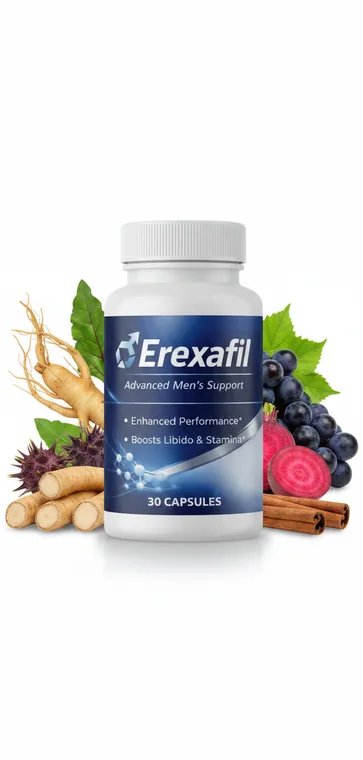
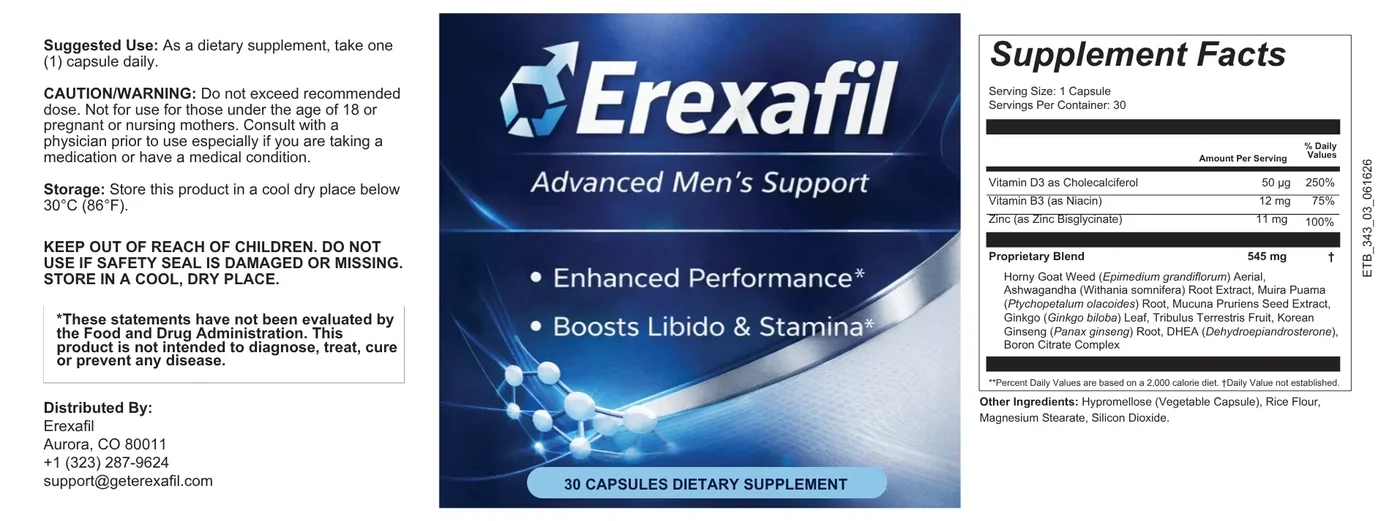
The Erexafil panel is a fair example of the pattern, so it is worth walking through as a specimen rather than a recommendation. The named nutrients are vitamin D3 as cholecalciferol at 50 micrograms, vitamin B3 as niacin at 12 milligrams, and zinc as zinc bisglycinate at 11 milligrams — the last of which is exactly the recommended dietary allowance for adult men. Underneath sits a 545 milligram proprietary blend: horny goat weed aerial parts, ashwagandha root extract, muira puama root, mucuna pruriens seed extract, ginkgo leaf, Tribulus terrestris fruit, Korean ginseng root, DHEA and a boron citrate complex.
That is the whole category in miniature. A handful of nutrients where deficiency genuinely matters, a stack of botanicals with wildly differing evidence quality, and a hormone precursor that most buyers never notice is there. The question what is testosterone booster is really two questions in a trench coat: what is in the bottle, and what does each thing in it have behind it. The first is answerable from the label in thirty seconds. The second takes the rest of this article.
Read the panel before the promise
Erexafil publishes amounts for vitamin D3, niacin and zinc bisglycinate, and names the nine botanicals in its 545 mg blend without splitting the total. Hold it against the ranges in this article; current packs are on the official order page.
Check Availability & PricingThe ingredients that actually have human trial data
Sorting this category means separating three groups: nutrients where correcting a shortfall does something measurable, botanicals with genuine randomised human evidence for a specific outcome, and ingredients that are popular because they have always been popular.
Zinc and vitamin D belong to the first group. Zinc is required for testosterone synthesis and sperm production, and deficiency depresses both; correcting a real deficiency can raise a low level back toward normal. Adding more on top of adequacy does not keep pushing the number up. Vitamin D behaves the same way, and it has the added complication that you cannot know your status without a test. Both are fix-the-gap nutrients, which is a genuinely useful thing to be and a completely different thing from a booster.
Ashwagandha and Korean ginseng lead the second group. Standardised ashwagandha extracts have reduced perceived stress and cortisol in randomised trials, with some studies in stressed or physically active men reporting modest increases in testosterone and vitality measures over roughly eight to twelve weeks. Panax ginseng has the most credible data of any herb here for self-reported erectile function, at specific standardised doses. We have gone through both in more depth in our piece on what the research shows for Korean ginseng, ashwagandha and zinc.
The third group is larger than the marketing suggests. Tribulus terrestris is the clearest case: it is in almost every formula in the category, and randomised trials have repeatedly failed to show that it raises testosterone in men. Muira puama and mucuna pruriens have thin human literature. Horny goat weed is interesting in laboratory work — its icariin content has activity on the same enzyme pathway as prescription erectile drugs — but that has not translated into robust human trials at supplement doses, a gap we set out in full in our review of horny goat weed and icariin.
Two newer entrants sit in a category of their own and are worth checking before you buy on a podcast recommendation: Tongkat Ali has a genuine meta-analysis of human trials behind it, while Fadogia agrestis rests on rodent work with unresolved toxicity questions. We compare the two directly in Tongkat Ali versus Fadogia agrestis. And because the phrase “booster” is routinely used for products aimed at an entirely different outcome, it is worth reading how enhancement pills and testosterone boosters actually differ before comparing anything.
| Ingredient | Common form on labels | Amounts used in research or reference intakes | Strength of evidence in men |
|---|---|---|---|
| Zinc | Bisglycinate, gluconate, picolinate, oxide | RDA 11 mg for adult men; upper limit 40 mg daily | Strong for deficiency correction; little effect once replete |
| Vitamin D3 | Cholecalciferol, 25–125 mcg on labels | RDA 15 mcg (600 IU) for adults under 70; upper limit 100 mcg | Good for correcting low status; testing beats guessing |
| Ashwagandha | Standardised root extract | Commonly 300–600 mg daily in trials, over 8–12 weeks | Reasonable for stress and fatigue; modest, mixed hormonal signals |
| Korean ginseng | Panax ginseng root, standardised | Trials often used 1,500–3,000 mg daily, split across doses | Best-supported botanical for self-reported erectile function |
| Boron | Boron citrate complex | Small studies used roughly 10 mg daily; no RDA set | Thin and preliminary; interesting rather than established |
| Tribulus terrestris | Fruit or aerial extract | Widely used at 250–1,500 mg daily on labels | Weak — most randomised trials find no testosterone increase |
| Horny goat weed | Epimedium aerial parts (icariin) | No settled human dose; label amounts vary enormously | Laboratory and animal work only; human evidence thin |
| DHEA | Dehydroepiandrosterone | Studied at 25–100 mg daily in specific patient groups | A hormone, not a herb — needs medical oversight |
Proprietary blends and the dose problem
Look again at that panel and you will see the structural weakness of the whole category. Vitamin D3, niacin and zinc are listed individually, each with its own milligram figure, because that is what the rules require of named nutrients. The botanicals are listed as a single blend weight covering nine ingredients, in descending order of quantity but with no individual amounts. That is legal, extremely common, and it makes the evidence above almost impossible to apply.
Here is why it matters. Suppose the trials on a botanical used 600 milligrams a day of a standardised extract. If that ingredient appears inside a 545 milligram blend shared with eight others, it cannot possibly be present at the studied amount — even if it were the entire blend, it would fall short. Ingredient evidence and product evidence are not the same currency, and a blend is the mechanism that lets a product borrow the first while providing none of the second.
An ingredient can have good evidence while the product containing it has none. The blend weight is where those two facts get quietly swapped for each other.
This is the single most useful filter you can apply while shopping. Search for the best testosterone booster to buy online and the ranking pages will rarely mention it, because a blend that hides its amounts photographs exactly as well as one that discloses them. When we look at the Erexafil formula we say the same thing we would say about any of its competitors: the named nutrient amounts are checkable and sensible, and the botanical blend is not, because the label does not break it down. That is a limitation of the format, and pretending otherwise would be the easy path.
How long it takes, and what a realistic outcome looks like
Almost every ingredient with credible human data in this category was studied over eight to twelve weeks of consistent daily use. Vitamin D status can take a couple of months to shift meaningfully. Adaptogens like ashwagandha were trialled across similar windows. Nothing in the evidence base supports a same-day hormonal change, and a product promising one is describing a sensation rather than a measurement.
It also helps to be precise about what "works" would even mean. There are three different outcomes people conflate: a change in a blood testosterone number, a change in how someone feels — energy, drive, mood, sleep — and a change in a specific function. These do not move together reliably. A man can feel noticeably better on a supplement whose effect on his blood level is nil, usually because stress, sleep or a corrected nutrient shortfall did the work. That is a real benefit and worth having; it is simply not the same claim as the one the category name implies.
Men who search what is testosterone booster are usually asking about that middle outcome — day-to-day vitality — while the marketing answers the first. Expectation-setting matters here more than ingredient selection: modest, gradual, most noticeable in men who had something to correct, and layered on top of the unglamorous variables — body weight, sleep duration, alcohol intake, resistance training and untreated conditions like sleep apnoea — that influence testosterone far more than any capsule.
Safety, interactions and the DHEA question
Most of the common botanicals are well tolerated at the amounts found on labels, but "natural" is not a safety argument and this category carries several specific cautions worth knowing before you buy anything.
Zinc has a tolerable upper intake level of 40 milligrams a day for adults, and chronic intake above it interferes with copper absorption. Stacking a men's formula on top of a multivitamin and a separate mineral is the usual way men cross that line without ever taking a single high-dose product. Vitamin D has an upper limit of 100 micrograms daily; it is fat-soluble and accumulates, so more is genuinely not better. Ginkgo may add to the effect of anticoagulant and antiplatelet medicines, which is a conversation to have with a prescriber rather than a reason to panic. Ashwagandha has been associated with rare liver injury and is generally avoided in people with thyroid disease or on thyroid medication without medical advice.
DHEA deserves its own paragraph because it is qualitatively different from everything else in the blend. It is not a botanical: it is an endogenous steroid hormone that the body converts into testosterone and oestrogen. It is prohibited in most competitive sport, it is a prescription-only or restricted substance in a number of countries including the United Kingdom, Canada and Australia, and it can affect hormone-sensitive conditions. If a product contains it, that is a fact worth knowing before the first capsule, and it is the strongest single reason to run any product in this category past a clinician if you take medication or manage an existing condition.
One more practical caution. Products in this space are periodically the subject of regulatory warnings for containing undeclared prescription drug ingredients — typically sildenafil or tadalafil analogues in fast-acting products sold outside normal retail channels. That risk concentrates in the "immediate results" corner of the market, which is a good argument for buying from a manufacturer's own store rather than a marketplace listing of uncertain provenance.
What a testosterone booster cannot do
It cannot diagnose, treat, cure or prevent any disease, and nothing in this category may lawfully be sold as though it can. Clinically low testosterone — hypogonadism — is a medical diagnosis made from morning blood tests taken on more than one occasion, and it is managed with prescription therapy under monitoring. No supplement substitutes for that pathway, and choosing one instead of a test is how a treatable underlying cause goes unnoticed.
It cannot tell you what is actually wrong. Fatigue, low drive and poor erections are non-specific symptoms with a long differential: thyroid disease, depression, sleep apnoea, diabetes, medication side effects and cardiovascular disease all present this way. Erectile difficulty in particular can be an early vascular warning sign, which makes it a symptom worth investigating rather than self-treating.
It cannot be assumed to contain what the research used, for the blend reasons above. And there is no single best over the counter male testosterone booster, because the right answer depends on which of these ingredients addresses something you are actually short of — a question only a test and a clinician can answer for you.
A limit that applies to us as well: we have not seen a randomised trial of any finished multi-ingredient men's supplement on this market, including the ones we write about. The literature covers ingredients. Products borrow from it. That gap is real, and we would rather name it than write around it.
Medical note: this article is general information, not medical advice. Persistent fatigue, low libido or erectile difficulty needs a clinical assessment. Speak to a healthcare professional before starting any supplement, especially if you take medication or have a heart, blood-pressure, thyroid or hormone-sensitive condition — and note that products in this category, including Erexafil, can contain DHEA, a hormone.
Scientific references
- NIH Office of Dietary Supplements — Zinc Fact Sheet for Health Professionals
- NIH Office of Dietary Supplements — Vitamin D Fact Sheet for Health Professionals
- NIH NCCIH — Ashwagandha: Usefulness and Safety
- Mayo Clinic — Testosterone therapy: potential benefits and risks as you age
- Neychev & Mitev, J Ethnopharmacol 2005 — The aphrodisiac herb Tribulus terrestris does not influence androgen production in young men (PubMed)
Frequently asked
What is a testosterone booster supplement?
It is a marketing category rather than a defined product type. A testosterone booster is any over-the-counter dietary supplement sold on the promise of raising or supporting a man's own testosterone, and no regulator sets a standard for what has to be inside one. In practice almost all of them draw on the same short list of ingredients: zinc, vitamin D, boron, ashwagandha, Korean ginseng, fenugreek, Tribulus terrestris and, in some formulas, the hormone DHEA.
Do testosterone boosters really work?
It depends entirely on the ingredient and on the man taking it. Zinc and vitamin D can raise testosterone when a genuine deficiency is corrected, and ashwagandha has reasonable trial support for stress and fatigue with some modest hormonal signals in stressed men. In men who are already replete, most ingredients show little or no measurable effect, and Tribulus terrestris in particular has repeatedly failed to raise testosterone in randomised trials.
How long do testosterone boosters take to work?
Most of the ingredients with human data were studied over 8 to 12 weeks of daily use, not days. Correcting a vitamin D deficiency can take a few months to change a blood level, and adaptogens such as ashwagandha were trialled over roughly two to three months. Anything promising a same-day change is describing a sensation, not a hormone measurement.
Are over the counter testosterone boosters safe?
Most of the common botanicals are well tolerated at label amounts, but the category has real cautions. Zinc has a tolerable upper intake of 40 mg a day for adults and chronic excess depletes copper, ginkgo may add to the effect of blood thinners, and DHEA is a hormone that is banned in most sport and should only be taken with medical oversight. Talk to a clinician before starting, particularly if you take medication or manage a heart, blood pressure or hormone-sensitive condition.
Compare a formula that prints its amounts
Erexafil is a once-daily men's capsule with its named nutrient amounts on the panel. If you are working out where to buy testosterone booster products and want something you can weigh against the ranges above, the official store lists the current options and the full label.
See Erexafil on the Official Store