Do Natural Testosterone Boosters Actually Work?
Quick Answer: Do Natural Testosterone Boosters Actually Work?
A natural testosterone booster can offer modest support, mainly when it corrects a nutrient gap such as low vitamin D, zinc or magnesium. It is not a drug and does not treat clinically low testosterone. Expect gradual help over four to twelve weeks, paired with sleep, training and stress control.
- When it works: best when it fills a real deficiency; least when you are already replete.
- What it is not: a replacement for a blood test, a diagnosis, or testosterone replacement therapy.
- Realistic outcome: modest, gradual vitality support over weeks — not a same-day hormone spike.
Type “does a natural testosterone booster work” into a search bar and you join roughly 12,100 other men doing the same thing every month. It is one of the highest-intent, highest-competition questions in men's health, and the answers you get back tend to swing between two useless extremes: breathless promises of a doubled hormone level, or a flat dismissal that it is all a scam. The truth sits in the boring middle, and the boring middle is where the useful information lives. A natural testosterone booster is neither miracle nor con — it is a support tool whose effect depends almost entirely on the man taking it.
Do natural testosterone boosters actually work? The short, honest answer
Yes, for some men, in specific situations, to a modest degree. No, if you are expecting a supplement to behave like a prescription hormone. The reason the answer has to be split like that is mechanistic, not evasive. The ingredients with the strongest human evidence do their work by correcting a shortfall — they help you get back to normal, not push you past it. If you have something to fix, there is room to feel a difference. If you do not, there is very little for the ingredient to do.
This is the single most important idea in the whole conversation, so it is worth stating plainly before anything else: a natural testosterone booster is a gap-filler, not an accelerator. The marketing sells acceleration because acceleration is exciting. The evidence supports gap-filling, which is quieter and, for the right person, genuinely worthwhile.
The mechanism that decides everything: fixing a gap versus pushing past normal
Picture two men. The first is chronically low on vitamin D, runs short on zinc from a limited diet, sleeps six broken hours a night and lives under sustained stress. The second eats well, lifts three times a week, sleeps eight hours and has replete nutrient status across the board. Give both the same supplement and you should expect very different results, because the first man has multiple gaps to close and the second has almost none.
Nutrients like zinc, vitamin D and magnesium are the clearest example. Zinc is required for testosterone synthesis, and a genuine deficiency depresses the hormone; correcting that deficiency can bring a low level back toward normal. Vitamin D behaves like a hormone in the body and the same logic applies. Magnesium supports the enzymatic machinery around hormone function, and shortfalls are common. In each case the benefit is real and it is bounded: you get the improvement that comes from removing the deficiency, and then adding more on top does not keep pushing the number higher. That ceiling is a feature of how the biology works, not a flaw in the product.
Understanding this ceiling explains almost every disappointed review you will read. A man with no deficiency takes a booster, feels little, and concludes the category is worthless. A man with several gaps takes the same product, feels noticeably better, and calls it life-changing. Both are describing the same mechanism from opposite ends of it.
The ingredients that have real human evidence
Sorting a natural testosterone booster means separating three tiers: nutrients where correcting a shortfall does something measurable, botanicals with genuine randomised human evidence, and ingredients that are popular mostly because they have always been popular.
Zinc, vitamin D and magnesium lead the first tier — fix-the-gap nutrients with well-established roles in male physiology. Ashwagandha, a standardised root extract at 300 to 600 mg daily, leads the second: it has reasonable trial support for reducing perceived stress and cortisol, with some studies in stressed or active men reporting modest gains in testosterone and vitality over eight to twelve weeks. Korean ginseng (Panax ginseng) carries the most credible botanical data for self-reported erectile function at standardised doses. Tongkat Ali (Eurycoma longifolia) has moved from folklore toward evidence: a 2022 systematic review reported that it improved serum total testosterone in men across several trials, which is a stronger signal than most botanicals in this space can claim, though effect sizes still vary by product and dose. Boron shows preliminary promise in small studies using around 10 mg daily.
The third tier is larger than the marketing admits. Tribulus terrestris is the clearest cautionary case: it is in almost every formula on the shelf, and randomised trials have repeatedly failed to show it raises testosterone in men. Muira puama and mucuna pruriens have thin human literature. Horny goat weed is interesting in laboratory work but has not translated into robust human trials at supplement doses. We compare two of the trendiest actives head to head in our piece on Tongkat Ali versus Fadogia Agrestis for testosterone, and go deeper on the herbal trio in the evidence behind Korean ginseng, ashwagandha and zinc.
| Ingredient | Typical studied amount | Strength of human evidence in men |
|---|---|---|
| Zinc | RDA 11 mg; upper limit 40 mg daily | Strong for deficiency correction; little effect once replete |
| Vitamin D3 | RDA 15 mcg (600 IU); test before dosing | Good for correcting low status; supports normal T |
| Magnesium | RDA around 400–420 mg for adult men | Supportive when correcting a shortfall |
| Ashwagandha | 300–600 mg standardised extract, 8–12 weeks | Reasonable for stress and fatigue; modest hormonal signals |
| Tongkat Ali | Often 200–400 mg standardised extract in trials | Promising — 2022 review found improved serum total T |
| Korean ginseng | 1,500–3,000 mg daily, split doses | Best botanical data for self-reported erectile function |
| Tribulus terrestris | 250–1,500 mg daily on labels | Weak — most randomised trials find no increase |
See a formula built on the studied actives
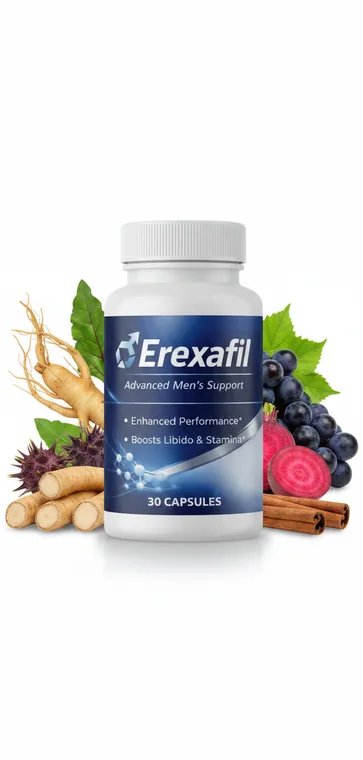
Erexafil pairs zinc, vitamin D3 and niacin with a named botanical blend including ashwagandha, Korean ginseng and horny goat weed — the same short list the research keeps returning to. The full panel and current options are listed on the official store.
Check Availability & Pricing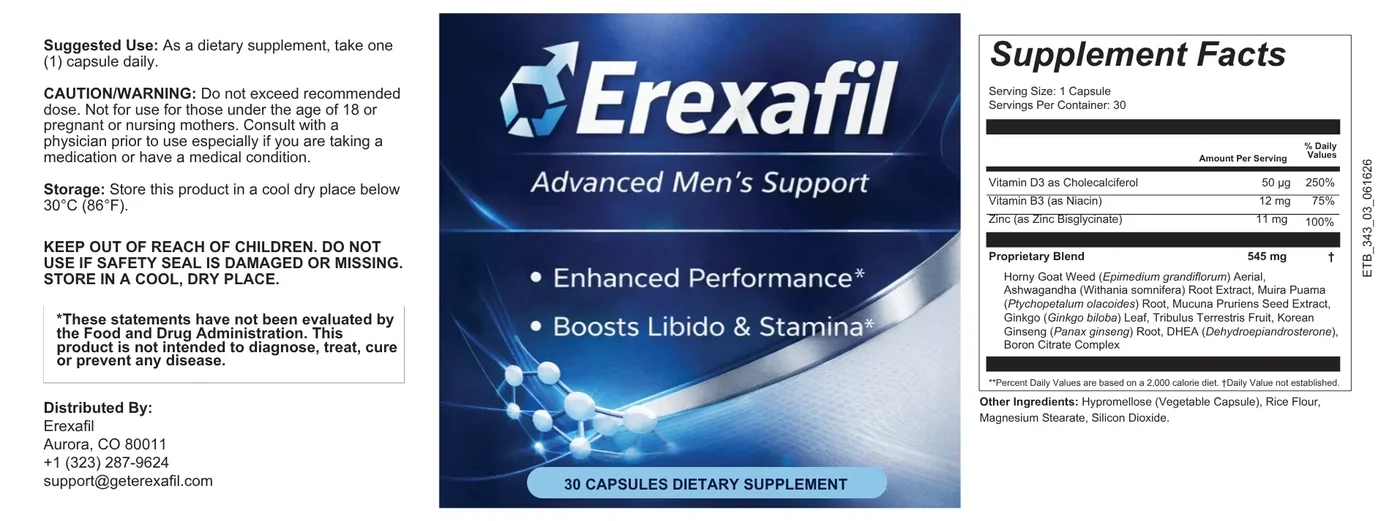
What a natural testosterone booster cannot do
Being honest about the ceiling means being just as clear about the floor. There are hard limits on what any product in this category can lawfully or realistically achieve, and knowing them protects you from both wasted money and missed diagnoses.
It cannot diagnose, treat, cure or prevent any disease, and nothing in this category may lawfully be sold as though it can. Clinically low testosterone — hypogonadism — is a medical diagnosis, generally flagged when morning blood levels fall under about 300 ng/dL on more than one test. That is managed with prescription therapy under monitoring, and a natural testosterone booster is not a substitute for it. Choosing a supplement instead of a blood test is how a treatable underlying cause — thyroid disease, sleep apnoea, depression, diabetes, a medication side effect — goes unnoticed.
It also cannot be assumed to contain what the research used. Many products bury their botanicals in a proprietary blend weight, which means an ingredient with good evidence can be present at a fraction of its studied dose. Ingredient evidence and product evidence are different currencies, and a blend is the mechanism that lets a product borrow the first while providing little of the second. And a limit that applies to us too: we have not seen a randomised trial of any finished multi-ingredient men's supplement on this market, including the ones we write about. The literature covers ingredients; products borrow from it. Naming that gap is more useful than writing around it.
A realistic timeline and a realistic outcome
Almost every ingredient with credible human data here was studied over four to twelve weeks of consistent daily use, not days. Vitamin D status can take a couple of months to shift meaningfully on a blood test. Adaptogens like ashwagandha were trialled across similar windows. So a realistic expectation is modest support that builds gradually, most noticeable in men who had something to correct, and layered on top of the unglamorous variables that move testosterone far more than any capsule.
It also helps to be precise about what “works” even means, because three different outcomes get conflated. There is a change in a blood testosterone number, a change in how someone feels — energy, drive, mood, sleep — and a change in a specific function. These do not move together reliably. A man can feel meaningfully better on a supplement whose effect on his blood level is nil, usually because a corrected nutrient gap, better sleep or lower stress did the work. That is a genuine benefit worth having; it is simply not identical to the hormone claim the category name implies. The lifestyle levers underneath all of this — body weight, sleep, alcohol, resistance training — are the subject of our companion guide to natural ways to increase testosterone.
Three myths worth clearing up
Myth: a natural booster raises testosterone in everyone. It does not. The response is concentrated in men with a gap to close. In replete men, most ingredients show little measurable change, which is exactly what the deficiency-correction mechanism predicts.
Myth: if it were natural, it would be automatically safe. Natural is not a safety argument. Zinc has an upper limit of 40 mg a day and chronic excess depletes copper; ashwagandha is generally avoided in thyroid disease without medical advice; ginkgo may add to the effect of blood thinners; and some formulas contain DHEA, a hormone that needs medical oversight. Dose and interactions matter regardless of origin.
Myth: a strong supplement can replace TRT. It cannot, and a product implying otherwise is one to avoid. Replacement therapy treats a diagnosed deficiency; a booster supports normal function and fills gaps. They sit in different lanes, and a man who suspects he is genuinely low is better served by a morning blood test than by a bigger bottle. If you want a framework for grading products before you buy, our guide to the best testosterone booster for men in 2026 lays out the checks we use.
Where Erexafil fits
We publish about Erexafil, so we position it the way the evidence allows: as a support formula, not a drug. It is a once-daily men's capsule that pairs zinc as zinc bisglycinate, vitamin D3 and niacin — the fix-the-gap nutrients — with a named botanical blend including ashwagandha, Korean ginseng, horny goat weed and Tribulus. Its named nutrient amounts are printed and checkable; the zinc figure sits at the adult male RDA. Where it shares the category's central limitation is the botanical blend, which carries one combined weight rather than individual doses, so those specific amounts are not verifiable from the label. That makes it a reasonable candidate for a man in the normal range looking to support everyday vitality alongside better sleep and training — and a poor substitute for a blood test if you suspect you are clinically low. That distinction, more than any ingredient, is what decides whether a natural testosterone booster is the right tool for you.
Medical note: this article is general information, not medical advice. Persistent fatigue, low libido or erectile difficulty needs a clinical assessment. Speak to a healthcare professional before starting any supplement, especially if you take medication or have a heart, blood-pressure, thyroid or hormone-sensitive condition — and note that products in this category, including Erexafil, can contain DHEA, a hormone.
Scientific references
- NIH Office of Dietary Supplements — Zinc Fact Sheet for Health Professionals
- NIH Office of Dietary Supplements — Vitamin D Fact Sheet for Health Professionals
- NIH NCCIH — Ashwagandha: Usefulness and Safety
- Leisegang et al., Medicina 2022 — Eurycoma longifolia improves serum total testosterone in men: a systematic review and meta-analysis of clinical trials (PubMed)
- Mayo Clinic — Testosterone therapy: potential benefits and risks as you age
Related reading
Frequently asked
Do natural testosterone boosters really increase testosterone?
Sometimes, and the effect depends heavily on where you start. The evidence is strongest when a booster corrects a genuine deficiency: vitamin D, zinc and magnesium can support normal testosterone when you are low in them. Some botanicals show promise too, and a 2022 systematic review reported that Tongkat Ali improved serum total testosterone in men across several trials. In men who are already replete, most ingredients produce little measurable change. So a natural testosterone booster can raise or support testosterone in the right person, but it is not a guaranteed lever for everyone.
Who benefits most from a natural testosterone booster?
Men with a correctable gap. If you are short on vitamin D, zinc or magnesium, sleeping poorly, under chronic stress, or carrying excess weight, there is room for a supported ingredient to help. Men who already eat well, train, sleep and have replete nutrient status have less to gain, because you cannot fix a shortfall that is not there. The clearest non-candidates are men with clinically low testosterone, who need a diagnosis and medical care rather than an over-the-counter capsule.
Can a supplement replace testosterone replacement therapy (TRT)?
No. Testosterone replacement therapy is a prescription treatment for diagnosed hypogonadism, typically when morning blood levels fall under about 300 ng/dL on more than one test, and it is managed with medical monitoring. A natural testosterone booster is a dietary supplement that supports normal hormone function and everyday vitality, mostly by filling nutrient gaps. It cannot substitute for a diagnosis or for medical treatment, and choosing one instead of getting tested can let a treatable underlying cause go unnoticed.
What natural testosterone booster ingredients have human evidence?
The best-supported are the nutrients that matter when you are deficient: zinc, vitamin D and magnesium. Among botanicals, ashwagandha has reasonable trial data for reducing stress and cortisol with some modest hormonal signals in stressed men, Korean ginseng has the most credible evidence for self-reported erectile function, and Tongkat Ali improved serum total testosterone across trials in a 2022 systematic review. Boron shows preliminary promise. Tribulus terrestris, despite being everywhere, has repeatedly failed to raise testosterone in randomised trials.
Support that fits realistic expectations
If a modest, gradual boost over four to twelve weeks alongside better habits is the outcome you are after, Erexafil is a once-daily men's capsule built on the studied nutrients and botanicals. See the full label and current options on the official store.
See Erexafil on the Official Store