Tongkat Ali vs Fadogia Agrestis for Testosterone: Backed Herb, or Just Hyped?
Quick Answer: Tongkat Ali vs Fadogia Agrestis for Testosterone
On evidence, Tongkat Ali vs Fadogia Agrestis is not a close contest. Tongkat Ali has decades of research and human trials, including a 2022 meta-analysis reporting improved serum total testosterone. Fadogia Agrestis has rat-only data, zero human trials as of 2025, and dose-dependent organ toxicity in animals at higher doses.
- Tongkat Ali: human trials at roughly 200–400 mg/day of a 100:1 extract for 4–12 weeks; side effects mild.
- Fadogia Agrestis: rat studies only, no human safety data, testicular toxicity signals at high doses.
- Verdict: a herb with human evidence beats a viral one that has none.
Scroll any fitness forum or podcast clip long enough and you will meet the same two names, usually in the same breath: Tongkat Ali and Fadogia Agrestis, marketed as the natural testosterone stack that finally does what a decade of Tribulus never could. The pairing sounds authoritative. It is repeated so often that most buyers assume both herbs carry the same kind of proof. They do not. When you actually lay Tongkat Ali vs Fadogia Agrestis side by side and read what has been published, one of them has a genuine human research trail and the other has almost nothing but rodents and enthusiasm. This article is about telling those two situations apart — because a formula is only as trustworthy as the evidence behind the herbs printed on its label.
Why these two herbs blew up at the same time
The popularity is a marketing story before it is a science story. Both herbs come from traditional use — Tongkat Ali (Eurycoma longifolia) from Southeast Asia, Fadogia Agrestis from West Africa — and both got a second life when high-profile podcasters described stacking them for drive, mood and gym performance. That endorsement did something research alone never manages: it turned two obscure botanical names into search terms with hundreds of thousands of monthly queries. Supplement brands followed the demand, and within a couple of years the pair had migrated from niche powders into mainstream capsules.
Here is the problem with letting popularity stand in for proof. The reasons a herb goes viral — a charismatic anecdote, a plausible mechanism, a compelling before-and-after — are unrelated to whether it has been tested in humans, at what dose, for how long, and with what safety monitoring. Virality rewards a good story. Evidence rewards a boring, repeatable measurement. The two herbs in this comparison sit on opposite sides of that gap, and the rest of this piece is about where each one actually stands.
Tongkat Ali: the herb with an actual human research trail
Tongkat Ali is the older, better-studied of the two by a wide margin. It has been the subject of research for decades, and that research includes the thing that matters most: randomised, controlled trials in people, not just cells in a dish or rats in a cage. A 2022 meta-analysis pooling human studies reported improved serum total testosterone in men taking standardised extract compared with placebo, alongside signals for reduced fatigue and better mood in some trials. Other work has looked at its effect on stress hormones and on the ratio of testosterone to cortisol, which is the more interesting story than a raw number: several studies suggest its benefit may come partly from moderating stress rather than from directly cranking a gland.
Dose and standardisation are where the useful detail lives. Most human trials used a standardised extract in the range of 200 to 400 milligrams per day, typically described as a 100:1 water extract, taken for roughly four to twelve weeks. That is a specific, repeatable protocol — the kind of thing you can hold a product against. Reported side effects were mild and uncommon: occasional sleep disturbance, and in some reports a slight rise in resting heart rate. None of this makes Tongkat Ali a miracle, and the effect sizes in the literature are modest rather than dramatic. But "modest, measured in humans, at a defined dose" is a completely different category of claim from what its stack partner can offer.
It is worth being clear about the ceiling here too. Tongkat Ali is a support ingredient with human data for narrow outcomes, not a treatment for diagnosed low testosterone. The same honesty we apply to the whole category in our overview of what a testosterone booster label really covers applies to its most-researched single herb: real, checkable evidence, and real limits.
Fadogia Agrestis: viral, but the data is still rat-only
Fadogia Agrestis is the newer arrival, and it is where the comparison gets uncomfortable for its fans. Almost everything cited for Fadogia and testosterone traces back to animal studies — specifically rat models, some of which reported elevated testosterone and increased sexual behaviour after dosing. Those studies are real and they are interesting. They are also, as of 2025, the entire testosterone case for the herb. There are no published randomised human trials establishing that Fadogia Agrestis raises testosterone in men, no human dose-finding work, and no long-term human safety data. The popular "600 mg per day, five days on and two days off" protocol you see repeated online is not drawn from a validated study; it is a convention that spread because someone said it, not because it was tested.
That distinction is the whole point of comparing the two herbs. A rat is not a small man. Species differ enormously in how they absorb, metabolise and respond to plant compounds, and the history of supplements is full of ingredients that lit up in rodents and did nothing measurable in humans. Taking Fadogia today is not "using a proven natural booster." It is volunteering as an uncontrolled experiment on a compound whose human effects and human safe dose have never been mapped.
An animal signal is a reason to run a human trial, not a substitute for one. Fadogia Agrestis has the first and is still missing the second.
Prefer herbs that have been tested in people?
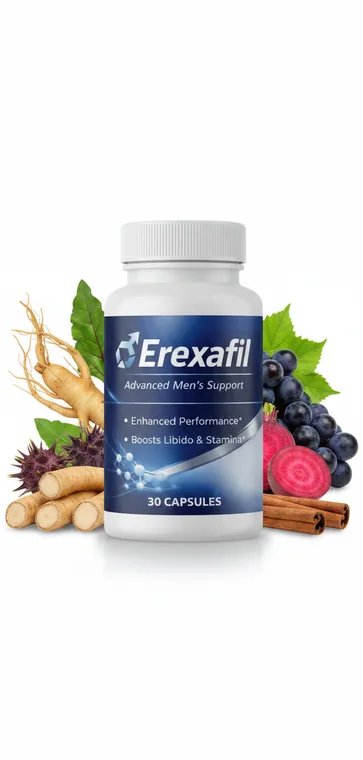
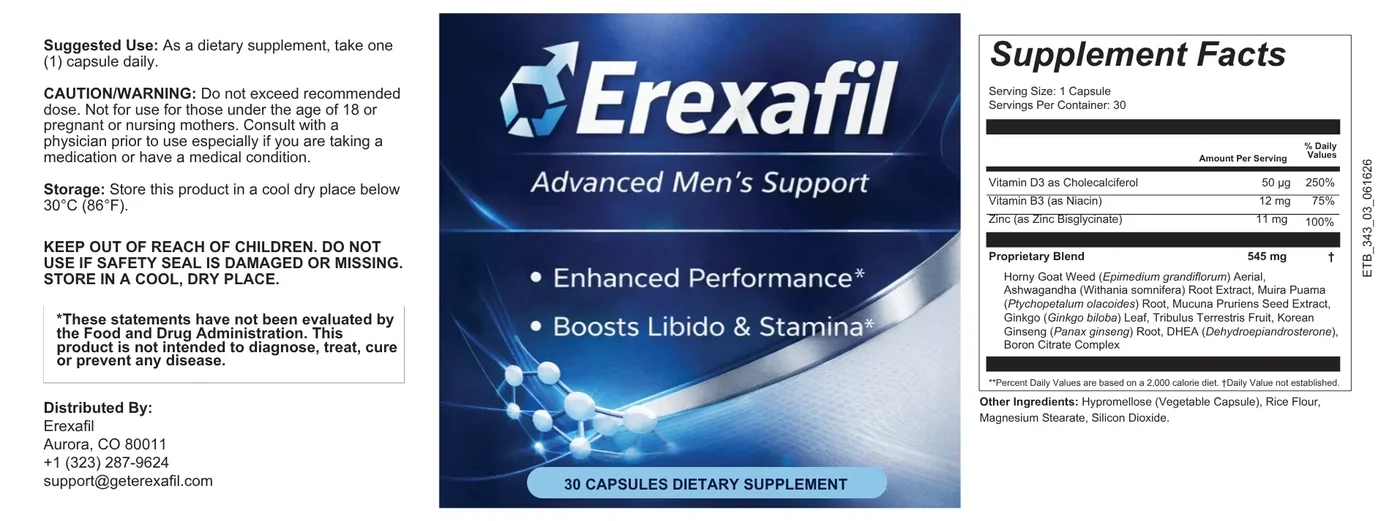
A well-built men's formula leans on the researched end of the shelf — ashwagandha, Korean ginseng and named nutrients — and prints its amounts so you can check them against the ranges in this article. Erexafil lists its full panel on the official store.
Check Availability & PricingTongkat Ali vs Fadogia Agrestis, side by side
The table below compresses the comparison into the facts a buyer can actually use. Notice that the columns are not "which sounds stronger" but "what has been measured, in what species, at what dose, with what known risks." That framing is the single most useful filter you can carry into any supplement decision.
| Factor | Tongkat Ali | Fadogia Agrestis |
|---|---|---|
| Human trials | Yes — randomised trials plus a 2022 meta-analysis | None published as of 2025 |
| Testosterone evidence | Improved serum total testosterone in pooled human data | Rat studies only; no human confirmation |
| Studied dose | 200–400 mg/day of a 100:1 extract, 4–12 weeks | No validated human dose; 600 mg/day protocol is unverified |
| Known side effects | Mild — occasional sleep disturbance, slight heart-rate rise | Dose-dependent organ toxicity in animals, incl. testes |
| Long-term safety | Reasonable short-term human record | Unknown — no human safety data at all |
| Honest verdict | Modest but real, human-tested support ingredient | Promising in rodents; unproven and unvetted in people |
Three objections worth answering honestly
"But the animal results for Fadogia were impressive." They were, and that is exactly why the herb deserves a proper human trial rather than a marketing campaign. Impressive rodent data is the starting line of the research process, not the finish. Plenty of ingredients that performed brilliantly in rats — across every category of supplement, not just this one — failed to reproduce anything in controlled human studies. Being excited by the rat data is fine; treating it as a human result is the error.
"Tongkat Ali's effect is small, so what is the point?" The effect in the literature is modest, and we would rather say so than inflate it. But a small, real, measured-in-humans effect is worth more than a large effect that exists only in rodents, because you can actually plan around the first one. It also stacks sensibly with the unglamorous variables — sleep, training, body composition, alcohol — that move testosterone far more than any single capsule. A modest herbal nudge on top of those is a reasonable ask; a dramatic transformation from a capsule alone is not.
"If Fadogia were dangerous, it would not be sold." That reasoning assumes a level of pre-market safety review that dietary supplements simply do not receive. Herbs reach shelves without the human safety testing a drug requires, and regulators generally act after problems surface rather than before. The animal data on Fadogia already flags dose-dependent effects on the testes, which is not the note you want a testosterone herb to end on. "Still on sale" is not the same as "shown to be safe in people."
What this means when you read a formula's label
Bring the comparison back to the buying decision, because that is where it earns its keep. When a men's product prints its botanical list, you now have a lens: which of these herbs has human evidence, and which is riding a wave? A blend that reaches for Fadogia Agrestis to look cutting-edge is making a marketing choice, not an evidence choice. A blend that builds on ashwagandha and Korean ginseng — herbs with genuine randomised human trials for stress, fatigue and self-reported function — is making the more conservative one. We walk through that specific evidence in our deep dive on what the research shows for Korean ginseng, ashwagandha and zinc.
That is the lens we apply to the Erexafil formula itself. Erexafil leans on the researched end of the botanical spectrum — ashwagandha root and Korean ginseng alongside named nutrients like zinc and vitamin D3 — rather than chasing a rat-only herb for the sake of a trendy ingredient list. That is a point in its favour, and we would say the same about any competitor that made the same choice. It is not a claim that the finished product has its own trial; almost nothing in this category does, and we would rather name that gap than write around it.
One more practical filter, and it is the same one that reappears whenever we cover safety in our guide to testosterone supplement side effects and who should be careful: standardisation and disclosed amounts beat exotic-sounding names every time. An extract you can identify (a 100:1 Tongkat Ali, a standardised ginseng) at an amount you can read tells you more than a mysterious blend fronted by whatever herb is trending this quarter.
Medical note: this article is general information, not medical advice. It is not a claim that any herb or supplement diagnoses, treats, cures or prevents disease. Fadogia Agrestis in particular lacks human safety data. Speak to a healthcare professional before starting any supplement, especially if you take medication or manage a heart, blood-pressure, liver or hormone-sensitive condition.
Scientific references
- Leisegang et al., Medicina 2022 — Eurycoma longifolia improves serum total testosterone in men: a systematic review and meta-analysis of clinical trials (PubMed)
- Yakubu et al., Asian Journal of Andrology 2005 — Aphrodisiac potentials of aqueous Fadogia agrestis stem extract in male albino rats, the most-cited primary study and a rodent one (PubMed)
- NIH NCCIH — Ashwagandha: Usefulness and Safety
- NIH Office of Dietary Supplements — Zinc Fact Sheet for Health Professionals
- Mayo Clinic — Testosterone therapy: potential benefits and risks as you age
Related reading
Frequently asked
Is Tongkat Ali or Fadogia Agrestis better for testosterone?
On the weight of evidence, Tongkat Ali is the better-supported choice. It has decades of research behind it, including randomised human trials and a 2022 meta-analysis that reported improved serum total testosterone. Fadogia Agrestis, by contrast, has no human trials at all as of 2025; every testosterone finding attributed to it comes from rat studies. That does not make Fadogia guaranteed to fail in people, but it does mean anyone taking it is the experiment rather than reading about one.
Is Fadogia Agrestis safe if there are no human studies?
Its safety in humans is simply unknown, which is not the same as safe. The animal research that made Fadogia Agrestis popular also documented dose-dependent organ toxicity at higher doses, including effects on the testes, so the same studies that hint at a testosterone effect also raise a caution. With no human trials to establish a safe dose, no long-term data, and a common 600 mg per day protocol that has never been validated, the honest position is that nobody can tell you it is safe.
What is the clinically studied Tongkat Ali dosage?
Most human trials used a standardised extract in the range of 200 to 400 mg per day, typically a 100:1 water extract, taken for roughly 4 to 12 weeks. Reported side effects were mild and uncommon, such as occasional sleep disturbance or a slight rise in heart rate. As with any supplement, the standardisation on the label matters as much as the milligram figure, and anyone on medication or managing a health condition should confirm suitability with a clinician first.
Should a testosterone booster contain Fadogia Agrestis?
There is a reasonable argument for caution. Because Fadogia Agrestis has no human safety data and animal signals of organ toxicity, its presence in a formula is a reason to look closely rather than a selling point, and the 5-days-on, 2-days-off protocol you see online is not evidence of a validated dose. Many well-formulated men's products lean instead on herbs with human research, such as ashwagandha and Korean ginseng, which is the more conservative way to build a botanical blend.
Compare a formula built on tested herbs
If you would rather stack researched botanicals than gamble on a viral one, Erexafil is a once-daily men's capsule pairing ashwagandha and Korean ginseng with named nutrients, amounts on the panel. The official store lists the current options and the full label.
See Erexafil on the Official Store