Why Erexafil Uses Zinc Bisglycinate, Not Zinc Oxide
Quick Answer: Does the Form of Zinc Actually Matter?
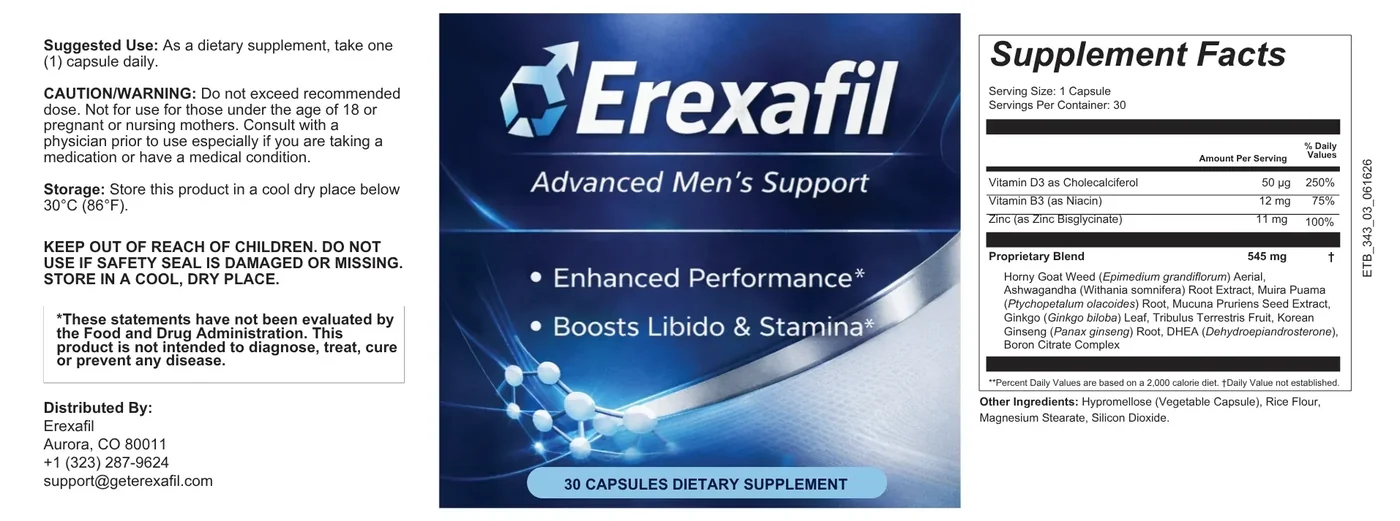
Erexafil declares "Zinc (as Zinc Bisglycinate)" at 11 mg elemental zinc, 100% DV. Zinc bisglycinate is a chelated (amino-acid-bound) form, distinct from inorganic forms like zinc oxide or zinc sulfate used in many cheaper competitor labels. Published comparative-absorption research on chemical forms of zinc in humans generally finds chelated amino-acid forms absorb at least comparably to, and in several studies better than, inorganic forms, with chelated forms also more commonly associated with better gastrointestinal tolerability.
- On Erexafil's label: Zinc (as Zinc Bisglycinate), 11 mg elemental zinc, 100% DV.
- Form category: organic chelate (zinc bound to two glycine molecules), not an inorganic salt.
- Why it matters: comparative human and mechanistic research favors chelated forms for absorption and GI tolerability over inorganic forms like zinc oxide.
Two other articles on this site already cover zinc's trial evidence: one examines zinc's role in vitality and libido outcomes, and another covers zinc as one of three best-evidenced minerals for testosterone support. Neither asks the question this article asks. This is not another "does zinc help testosterone" piece — it is a form-literacy piece about a specific label decision: why Erexafil's panel reads "Zinc (as Zinc Bisglycinate)" instead of the cheaper zinc oxide or zinc sulfate seen on many competitor labels, what the comparative absorption and gastrointestinal-tolerability research on chelated versus inorganic zinc forms actually shows, and how to read "elemental zinc" milligrams against the heavier total compound weight on any bisglycinate-form panel.
What Erexafil's label discloses about its zinc, exactly
The Supplement Facts panel lists "Zinc (as Zinc Bisglycinate)" at 11 mg, with "100%" printed in the %DV column. The parenthetical "(as Zinc Bisglycinate)" is the label's way of declaring the specific chemical form the zinc is delivered in — a requirement, not an optional flourish, because different chemical compounds containing zinc have different total molecular weights, and the 11 mg figure specifically refers to elemental zinc (the zinc atoms themselves), not the total weight of the zinc bisglycinate compound as a whole molecule. This is one of only three individually dosed nutrients on Erexafil's label, alongside Vitamin D3 and Niacin, printed with an exact amount and calculated %DV rather than sharing the undivided nine-botanical proprietary blend.
Zinc in Erexafil, at a glance
| Point | What is actually printed or published |
|---|---|
| Amount per capsule | 11 mg elemental zinc, sourced as Zinc Bisglycinate |
| Percent Daily Value shown on label | 100% |
| Form category | Organic chelate (zinc bound to two glycine amino-acid molecules) |
| Common cheaper alternative forms | Zinc oxide, zinc sulfate (inorganic salts) |
| Comparative absorption evidence (chelate vs. inorganic) | Chelated forms generally absorb at least comparably, often better, per published human and in vitro comparisons |
| Comparative GI tolerability | Chelated amino-acid forms more commonly associated with less GI irritation |
See the full formula behind the label
Zinc Bisglycinate is one of three individually dosed nutrients in Erexafil, alongside Vitamin D3 and Niacin, plus nine botanicals inside one proprietary blend. See the full label and current pricing.
Order ErexafilChelated vs. inorganic zinc: what the terms actually mean
"Zinc" on a supplement label is never elemental zinc metal by itself; it is always bound to something else that makes it stable and absorbable, and that "something else" is the compound form named in the parenthetical. Broadly, zinc compounds used in supplements fall into two categories. Inorganic forms, such as zinc oxide and zinc sulfate, bind zinc to a simple inorganic ion (oxide or sulfate); zinc oxide in particular is inexpensive to manufacture, which is why it appears frequently in lower-cost multivitamins and competitor supplements. Organic chelate forms, such as zinc bisglycinate (also called zinc glycinate), zinc picolinate and zinc citrate, bind zinc to an organic acid or amino acid — in bisglycinate's specific case, two molecules of glycine, the simplest amino acid, forming a ring-like structure around the zinc ion. The chelation process is proposed to protect the zinc ion during digestion and present it to the intestinal absorption pathway in a more readily usable form, which is the mechanistic basis for the absorption research discussed next.
What the comparative absorption research actually shows
A randomized, single-administration bioavailability study published in the International Journal for Vitamin and Nutrition Research in 2007 directly compared two oral zinc formulations — zinc bis-glycinate versus zinc gluconate — in twelve healthy female volunteers, measuring plasma zinc levels after a single dose of each form in a crossover design.[1] This is precisely the kind of head-to-head human comparison that matters for a form-literacy question, and it is direct evidence on zinc bisglycinate specifically, not zinc in general.
A 2024 narrative review published in Nutrients, titled "Comparative Absorption and Bioavailability of Various Chemical Forms of Zinc in Humans," surveyed the published human evidence across zinc oxide, zinc sulfate, zinc gluconate, zinc citrate, zinc picolinate, zinc bisglycinate/glycinate and other common supplemental forms.[2] Reviews of this kind are useful precisely because no single trial settles a comparative-absorption question on its own; a narrative review that surveys the human literature across multiple forms gives a more reliable overall picture than any individual study. The consistent theme across this comparative literature is that organic chelate forms, bisglycinate included, generally perform at least as well as, and in a number of studies better than, inorganic forms like zinc oxide on measures of absorption and bioavailability, while inorganic forms remain the least expensive to manufacture, which is the likely commercial reason they still appear widely in lower-cost products despite the comparative-absorption research favoring chelates.
Why phytic acid makes the form choice matter more, not less
A more recent 2025 in vitro comparative study published in Nutrients specifically examined the antagonistic influence of phytic acid — a compound naturally present in grains, legumes and many plant-based foods — on zinc absorption, comparing inorganic and chelated trace-mineral sources under conditions designed to simulate normal dietary phytate exposure.[3] Phytic acid is well known to bind free mineral ions in the digestive tract and reduce their absorption, and this is one of the specific mechanistic advantages proposed for chelated forms: because the zinc ion in a bisglycinate compound is already bound within the amino-acid chelate structure before it reaches the gut, it is proposed to be comparatively less available for phytic acid to bind and block, compared with a free inorganic zinc ion released from a salt like zinc oxide. This matters in ordinary practice because most people take a zinc supplement alongside meals that may contain some dietary phytate, not in a fasted, phytate-free state, which is exactly the real-world condition this kind of comparative research is designed to approximate.
Gastrointestinal tolerability: the other half of the "why bisglycinate" answer
Absorption efficiency is only one half of why a formulator might choose a chelated form; the other, related half is gastrointestinal tolerability. Inorganic zinc salts, including zinc oxide and zinc sulfate, are more frequently associated in the supplement-tolerability literature with stomach upset, nausea and a metallic taste when taken on an empty stomach, compared with chelated amino-acid forms, which are more commonly reported as gentler on the stomach — a practical consideration for a once-daily capsule intended for sustained regular use rather than occasional dosing. Better tolerability does not change the underlying nutritional dose delivered, but it is directly relevant to a real-world outcome that absorption percentages alone do not capture: whether someone is likely to keep taking a supplement consistently without gastrointestinal discomfort discouraging regular use.
Reading "elemental zinc" against the compound weight
This is the practical label-literacy skill this ingredient teaches. When a Supplement Facts panel prints "Zinc (as Zinc Bisglycinate) … 11 mg," the 11 mg figure is, by FDA labeling convention, the elemental zinc amount — the actual weight of zinc atoms delivered — not the total weight of the zinc bisglycinate molecule, which is heavier because it includes the two bound glycine molecules as well. A shopper comparing two zinc-containing products should look specifically for whether "elemental zinc" is what is being reported, particularly on products that state only a total compound weight without clarifying the elemental portion; mismatched reporting between products is one of the more common, and more confusing, sources of apparent-dose discrepancies when comparing supplement labels side by side. Erexafil's panel reports the elemental amount directly (11 mg, 100% DV), which is the standard, comparable way to read any zinc-compound dose.
Three questions worth asking before you buy
“Does a chelated form mean Erexafil's zinc is more effective for testosterone or libido?” Not covered by this article — this piece addresses absorption and tolerability of the zinc form itself, not efficacy for any specific outcome, which is addressed separately in the zinc-and-testosterone and zinc-and-vitality articles linked below.
“Is zinc oxide a 'bad' form to avoid entirely?” Not necessarily bad, but the comparative-absorption research consistently favors chelated forms like bisglycinate on both absorption and GI tolerability, which is a legitimate, evidence-based reason a formulator might choose the costlier chelate over the cheaper inorganic salt.
“Why does the label bother specifying the form at all?” Because the chemical form determines both how much of the stated elemental zinc your body is likely to actually absorb and how well you are likely to tolerate taking it regularly — information a bare "Zinc … 11 mg" line without a form specified would not give you.
How Erexafil handles zinc, honestly
Erexafil's label discloses the zinc amount, its elemental basis and its specific chemical form clearly, which is more transparent than a listing that states only a milligram number without specifying the compound. The comparative-absorption advantage described above is a property of the chelated bisglycinate form in general, supported by published human and in vitro research, not a claim specific to this product that this article is making on Erexafil's behalf. For the rest of the formula and the full ingredient-by-ingredient picture, see our Erexafil review of ingredients and cost.
Medical note: this article is general information, not medical advice, and covers zinc absorption and form only, not treatment for any condition. Speak with a healthcare professional before starting any supplement, particularly if you take another zinc-containing product, since combined zinc intake above the Tolerable Upper Intake Level can interfere with copper absorption over time.
Scientific references
- Gandia et al., Int J Vitam Nutr Res 2007 — A bioavailability study comparing two oral formulations containing zinc (Zn bis-glycinate vs. Zn gluconate) (PubMed)
- Devarshi, Mao, Grant & Hazels Mitmesser, Nutrients 2024 — Comparative Absorption and Bioavailability of Various Chemical Forms of Zinc in Humans: A Narrative Review (PubMed)
- Rock et al., Nutrients 2025 — The Antagonistic Influence of Phytic Acid on Zinc Absorption: An In Vitro Comparison of Inorganic and Chelated Trace Mineral Sources (PubMed)
- NIH Office of Dietary Supplements — Zinc, Health Professional Fact Sheet
- U.S. FDA — Daily Value on the Nutrition and Supplement Facts Labels (elemental zinc declaration)
Related reading
Frequently asked
How much zinc is in Erexafil, and in what form?
11 mg of elemental zinc, sourced as Zinc Bisglycinate, printed at 100% of the Daily Value on the Supplement Facts panel.
What is zinc bisglycinate, and how is it different from zinc oxide?
Zinc bisglycinate is zinc bound (chelated) to two molecules of the amino acid glycine, an organic chelate form. Zinc oxide is an inorganic zinc salt. Published comparative-absorption research on chemical forms of zinc generally finds chelated amino-acid forms absorb at least as well as, and in several studies better than, inorganic forms like zinc oxide, with chelated forms also more often associated with better gastrointestinal tolerability.
What does "elemental zinc" mean on a supplement label?
Elemental zinc is the actual weight of zinc atoms your body receives, as distinct from the total weight of the zinc compound (for example, zinc bisglycinate as a whole molecule, which includes the glycine portion). Supplement labels are required to declare the elemental zinc amount, which is why Erexafil's panel reads "11 mg" rather than the heavier total compound weight.
Does the form of zinc affect whether it works for testosterone or libido?
This article covers absorption and form only, not efficacy for testosterone or libido outcomes, which is addressed in separate articles on this site covering zinc's trial evidence for vitality and for testosterone specifically.
See the full Erexafil label and current pricing
Compare the full ingredient list, the individually dosed nutrients, and the guarantee on the official store.
Order Erexafil