Best Prostate Supplement for Men: What Pumpkin Seed and Nettle Root Can and Cannot Do
Quick answer: are pumpkin seed and nettle root worth taking?
They are reasonable nutritional support with a plausible mechanism and modest, inconsistent human evidence — not a treatment for anything. Pumpkin seed supplies phytosterols, zinc and unsaturated fats, and nettle root supplies lignans and sterols that laboratory work links to hormone-binding proteins and to growth signalling in prostate tissue. The published trials are small, often test the two together so neither can be credited alone, and run for months rather than days.
- Best case: a slow, mild contribution to comfort in men who are already doing the basics.
- Watch the label: nettle root, not leaf — they are different plant parts with different chemistry.
- Hard limit: new, changing or worsening urinary symptoms need a clinician, not a capsule.
Why these two ingredients ended up on every men's label
Pumpkin seed and nettle root did not arrive by way of a marketing brainstorm. Both have long traditional use in European herbal practice for men's urinary comfort, both were formalised into standardised extracts by German phytomedicine manufacturers in the late twentieth century, and both were studied in that context. When American supplement makers built men's formulas decades later, these two came ready-made with a plausible story, a European monograph tradition, and a supply chain that could deliver a consistent extract. Popularity followed availability, as it usually does.
That history is worth knowing because it explains a pattern you will notice all through this article: the research on this pairing is real but it is European, often older, frequently small, and very often tests a combination product. A trial of a pumpkin-seed-and-nettle-root capsule that shows a change cannot tell you which of the two did it, or whether either did. That ambiguity is not a scandal. It is simply the shape of the evidence, and pretending otherwise is how supplement copy goes wrong.
What pumpkin seed actually brings
Pumpkin seed (Cucurbita pepo) is a genuinely nutrient-dense food. It is one of the better plant sources of zinc, it carries magnesium, and its oil is rich in unsaturated fatty acids and in phytosterols — plant sterols structurally similar to cholesterol, of which beta-sitosterol is the best known. Those sterols are the reason it appears in prostate formulas rather than in general multivitamins.
The proposed mechanism runs through 5-alpha reductase, the enzyme that converts testosterone into dihydrotestosterone. DHT is the androgen most closely associated with prostate tissue growth over a man's lifetime, and laboratory work has shown that certain plant sterols can interact with that enzyme system. That is a mechanistic finding in cells and tissue, not a demonstration of clinical effect in men, and the distance between the two is where most supplement marketing quietly cheats.
On the human side, randomised trials of pumpkin seed oil and pumpkin seed extract have been conducted, generally over several months, generally using urinary symptom questionnaires as the outcome. The results have been modest and inconsistent: some studies reported improvements in symptom scores against placebo, others found the placebo group improved nearly as much. Given how strongly urinary symptom scores respond to placebo in this field — a well-documented feature of this literature, not a criticism of any one study — modest differences are hard to interpret. The fair summary is that pumpkin seed is a sensible, well-tolerated nutritional ingredient whose clinical evidence is suggestive rather than settled.
Nettle root: the other half of the classic pairing
Stinging nettle (Urtica dioica) is two ingredients pretending to be one. The leaf, which is what most people picture, is used traditionally for seasonal and joint complaints and has a completely different chemical profile. The root is the part used in men's formulas, and it contains lignans, sterols, polysaccharides and a lectin fraction that the leaf does not supply in the same way.
Laboratory research on nettle root has focused on three ideas: interaction with sex-hormone-binding globulin, which influences how much testosterone circulates in free form; effects on aromatase; and effects on growth signalling in prostate cells. Each has been demonstrated in cell or binding studies. None has been convincingly traced through to a measurable outcome in men, which is the step that matters. Human trials exist, several from German research groups, and they lean positive on urinary symptom scores over three to twelve months — but they are small, several are old, and the combination-product problem applies to many of them.
The practical consequence for anyone shopping is unglamorous: read the plant part. A label that says "stinging nettle 250 mg" without specifying root has not told you what is in the capsule, and the leaf is considerably cheaper. This is the single most common way a men's formula looks like it contains the studied ingredient without containing it. If you are working out where to buy prostate supplements at all, that one line on the panel separates the serious products from the decorative ones faster than any ranking page will.
Want to see how a full men's formula is put together?
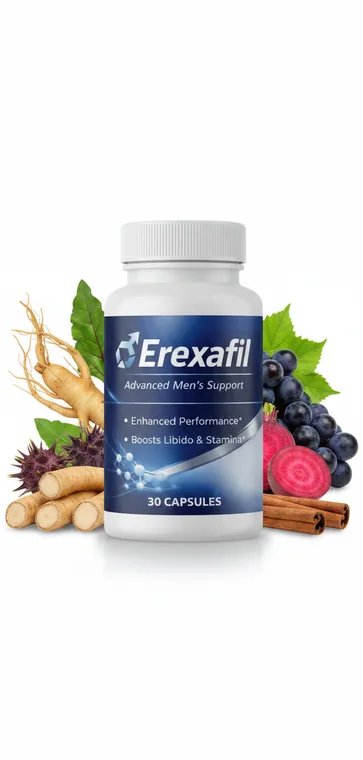
Erexafil takes a different route to men's support — ginseng, ashwagandha, horny goat weed and zinc rather than a prostate-specific sterol stack — and prints its amounts on the panel. If that fits what you are after, the official store has the current options.
Check Availability & PricingForms, amounts and what the research used
Form matters more here than in most supplement categories, because pumpkin seed can appear as whole seed, defatted seed powder, cold-pressed oil or a concentrated extract, and those are not equivalent per milligram. Nettle root can appear as a dried root powder or as a standardised extract at various ratios. When a study result is quoted at you, it belongs to one specific preparation.
| Ingredient | Form used in published research | Amount range studied | Strength of human evidence |
|---|---|---|---|
| Pumpkin seed oil | Cold-pressed oil, softgel | A few hundred mg daily, often split | Modest and mixed; several randomised trials over 3–12 months |
| Pumpkin seed extract | Concentrated seed extract, capsule | Several hundred mg daily | Fewer trials than the oil; results inconsistent |
| Nettle root extract | Standardised root extract, twice daily | Roughly 100–150 mg per dose in trial products | Small European trials, often as part of a combination |
| Nettle leaf | Dried leaf or tea | Not applicable to prostate research | Not the studied part — different chemistry |
| Pumpkin seed + nettle root | Fixed combination capsule | Product-specific | The most-tested version, but it cannot separate the two |
| Beta-sitosterol (isolated) | Purified phytosterol | Tens of mg daily in older trials | The clearest signal of this family, from small and dated studies |
| Whole pumpkin seeds (food) | Roasted or raw seeds | A handful daily | No prostate outcome data; good zinc and magnesium source |
Two things fall out of that table. First, the isolated phytosterol beta-sitosterol has the cleanest evidence of the whole family, which is mildly awkward for products that market the whole seed. Second, the combination is the most-tested format precisely because it is the format sold in Europe — commerce shaped the research question, not the other way around.
The strongest claim this pairing can honestly carry is "traditional use plus a plausible mechanism plus small trials that lean mildly positive." Anything stronger than that sentence is being sold to you, not shown to you.
Where the best prostate supplement for men fits alongside everything else
The phrase best prostate supplement for men implies a ranking exists. It does not, and the reason is worth stating: the things with the largest measured effect on men's urinary comfort are not supplements at all. Fluid timing in the evening, caffeine and alcohol load, body weight, blood pressure, physical activity, constipation, and a review of any medication with anticholinergic or decongestant effects all change symptoms more reliably than any botanical in this article. A capsule taken on top of those is a supplement in the literal sense. A capsule taken instead of them is a substitution that rarely goes well.
The second piece of context is diagnosis. Urinary symptoms in men over forty have several possible explanations, and they are not interchangeable. Distinguishing between them requires a history, an examination, sometimes a urine test, and a conversation about PSA testing and what a result would and would not mean. That is a clinician's job, it is not slow or difficult to arrange, and no amount of shopping replaces it. It is also worth knowing that several of the complaints men bring to a prostate aisle — flat energy, low drive, poor recovery — are not urinary at all, and our guide to the low testosterone symptoms men over 40 miss covers the ones worth raising at that appointment. Anyone who tells you that a supplement makes that assessment unnecessary is doing you harm.
Where does a men's vitality formula sit in all this? Honestly: adjacent. Products like Erexafil's daily men's support formula are built around libido, stamina and general vitality ingredients rather than prostate-specific sterols, and they should not be described as prostate products. The nutrient pair added to most prostate blends to pad the panel is a separate question again, and we take it apart in our review of lycopene and selenium as prostate nutrients. If you want to see how ratings and rankings in this category get manufactured before you compare anything, we take that apart in our piece on how prostate supplement star ratings get gamed.
Safety, tolerability and the interactions worth knowing
Both ingredients are well tolerated in the published research, and the reported side effects are mostly digestive: mild stomach upset, occasional nausea, and with the oil, reflux if taken on an empty stomach. Taking either with food usually resolves it. Neither is a stimulant and neither should affect sleep.
The interactions worth flagging are not dramatic but they are real. Nettle has been reported to affect blood pressure and blood sugar in some people, so anyone on antihypertensive or glucose-lowering medication should mention it to their prescriber rather than assume it is inert. Nettle has also been discussed in relation to anticoagulants because of its vitamin K content, which is more relevant to the leaf than the root, but is still worth raising if you take warfarin. Pumpkin seed oil is essentially a food oil and carries no notable interaction profile, though a seed allergy is possible as with any seed. Anyone who has had prostate surgery, is being monitored for a prostate condition, or is taking a prescribed 5-alpha reductase inhibitor or alpha blocker should speak to their clinician before adding a botanical that is proposed to act on the same pathway.
What this pairing cannot do
Four limits, stated without hedging. It cannot shrink anything, and no dietary supplement is permitted to claim it does. It cannot make a diagnosis or replace one, and it certainly cannot substitute for PSA discussion, examination or imaging when those are indicated. It cannot be relied on to work quickly — the trials that exist ran for months, so a two-week trial of a capsule tells you nothing except whether it upsets your stomach. And it cannot be assumed to be in the product you bought at the amount studied, because proprietary blends and unspecified plant parts are the norm in this category rather than the exception.
There is one more limit that applies to us as much as to anyone selling. A finished multi-ingredient supplement is not the same thing as the extracts used in the studies above, and we have not seen a trial of any of the men's formulas currently on the market, including the ones we write about. Ingredient evidence is a starting point for judgment, not a transfer of credibility to a bottle.
Medical note: this article is general information, not medical advice. Urinary and prostate symptoms need a clinical assessment. Speak to a healthcare professional before starting any supplement, especially if you take medication or have a heart, blood-pressure or hormone-sensitive condition — and note that products in this category, including Erexafil, can contain DHEA, a hormone.
Scientific references
- NIH NCCIH — Stinging Nettle
- NIH Office of Dietary Supplements — Zinc Fact Sheet for Health Professionals
- Mayo Clinic — Benign prostatic hyperplasia: diagnosis and treatment
- Harvard Health — Men's health topic library
- Safarinejad, J Herb Pharmacother 2005 — Urtica dioica (nettle root) for benign prostatic hyperplasia: a randomised, double-blind, placebo-controlled crossover study (PubMed)
Frequently asked
What do pumpkin seed and nettle root do for the prostate?
Both are nutritional support, not medicine. Pumpkin seed supplies phytosterols, zinc and unsaturated fats, and laboratory work suggests its sterols interact with the enzyme that converts testosterone to DHT. Nettle root contains lignans and sterols that laboratory studies link to sex-hormone-binding globulin and to growth signalling in prostate tissue. Human trials of both are small and mixed, so the honest position is a plausible mechanism with modest and inconsistent clinical support.
How much pumpkin seed oil and nettle root did the studies use?
Published trials of pumpkin seed have generally used a few hundred milligrams a day of oil or seed extract, and nettle root trials have generally used a standardised root extract taken twice a day. Amounts vary between studies and products, and many commercial labels use less than the studied range or hide the amount inside a proprietary blend, so the label is the only way to know what you are taking.
Is nettle root the same as nettle leaf?
No, and the difference matters. Nettle root is the part studied in men's prostate formulas, while nettle leaf is the part used traditionally for seasonal and joint complaints and is a different chemical profile. A label that says only nettle or stinging nettle without naming the plant part is not telling you which one you bought.
How long before pumpkin seed or nettle root would show anything?
Trials in this area typically run for three to twelve months rather than days, so nothing here is a fast-acting product. If you try a formula, give it a consistent daily run of at least eight to twelve weeks, keep a simple written note of symptoms, and stop if anything worsens. Persistent or new urinary symptoms should be assessed by a clinician rather than managed with supplements.
See what Erexafil actually contains
A once-daily men's support capsule with its nutrient amounts printed on the panel — zinc, vitamin D3, niacin and a named botanical blend. If you have narrowed down the best prostate supplement to buy and want a vitality formula alongside it, current options are on the official store.
See Erexafil on the Official Store