Ginkgo Biloba in Erexafil: Circulation Claims and the One Real Interaction Risk
Quick Answer: What Does Ginkgo Actually Do Here, and What's the Real Risk?
Ginkgo (Ginkgo biloba) Leaf sits inside Erexafil's 545 mg proprietary blend, with no individual amount disclosed. The seller groups it under "circulation and cognitive," reflecting Ginkgo's proposed vasodilatory and antiplatelet mechanism. Controlled human trial evidence for circulatory or sexual outcomes specifically is thin and mixed. The more important, better-established fact is safety-related: Ginkgo has a well-documented bleeding-risk interaction with anticoagulant drugs, antiplatelet drugs and NSAIDs, which matters more to most men than the efficacy question.
- On Erexafil's label: inside the 545 mg proprietary blend, no individual amount printed.
- Proposed mechanism: vasodilatory and antiplatelet effects on blood flow.
- Best-documented risk: bleeding-risk interaction with blood-thinning medications and NSAIDs.
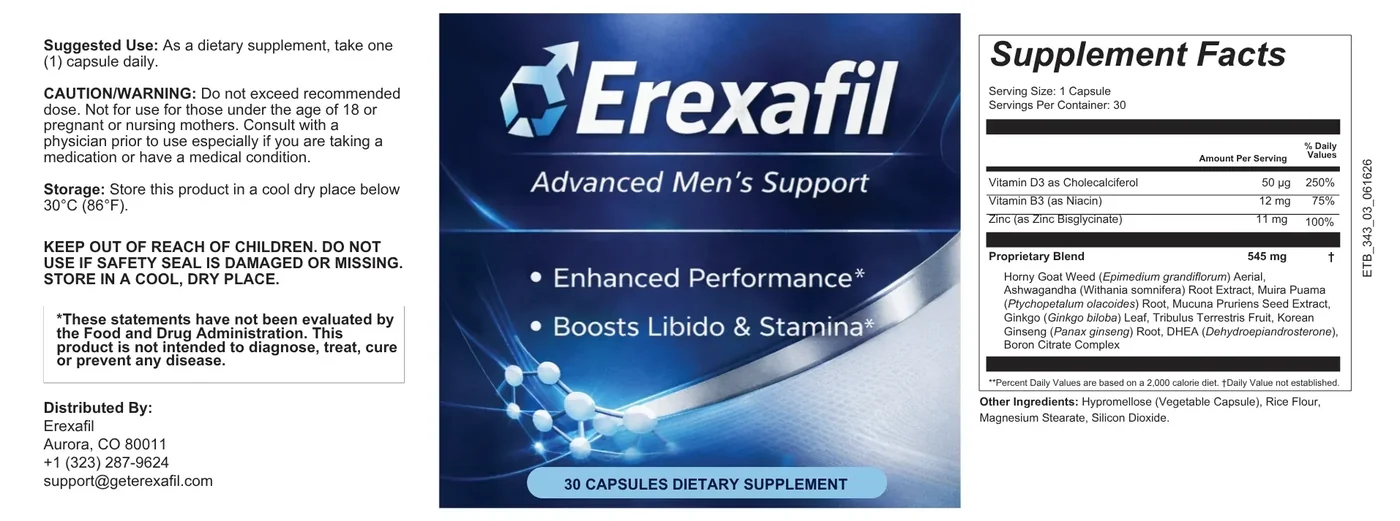
Ginkgo biloba is one of nine botanicals sharing Erexafil's proprietary blend, and despite appearing in the ingredient list of several other articles on this site, it has never been the actual subject of one — it is always a passing name-check inside a piece focused on something else. That gap matters, because Ginkgo is genuinely different from most of its blend-mates in one specific way: it carries a real, well-documented drug-interaction safety flag that has nothing to do with whether it "works." This article treats Ginkgo as the main subject. It covers the biological mechanism the seller is relying on when it groups Ginkgo under "circulation and cognitive," what controlled trials on circulatory and sexual outcomes actually show, and then spends real space on the bleeding-risk interaction, because that is the piece of information most worth knowing before combining this ingredient with certain common medications.
What Erexafil's label discloses about Ginkgo, exactly
Ginkgo (Ginkgo biloba) Leaf is the fifth of nine botanicals printed inside Erexafil's 545 mg "Proprietary Blend," alongside Horny Goat Weed, Ashwagandha, Muira Puama, Mucuna Pruriens, Tribulus Terrestris, Korean Ginseng, DHEA and Boron Citrate Complex. As with every ingredient in that blend, the panel prints no individual milligram amount for Ginkgo and no standardization percentage for its marker compounds (flavonoid glycosides and terpene lactones, the two compound classes typically standardized in commercial Ginkgo extracts) — only the combined 545 mg blend weight, marked with a dagger noting Daily Value has not been established. The seller's own marketing groups Ginkgo Biloba together with Mucuna Pruriens under a "circulation and cognitive" heading, distinct from the "performance and libido" and "energy/stamina/resilience" groupings applied to the blend's other ingredients — a seller-assigned category, not a clinical claim independently verified here.
Ginkgo Biloba in Erexafil, at a glance
| Point | What is actually known |
|---|---|
| Where it sits on Erexafil's label | Inside the 545 mg proprietary blend, 5th of 9 ingredients listed |
| Individual amount printed | None — only the combined 545 mg blend total is disclosed |
| Extract standardization (flavonoid glycosides / terpene lactones) | Not printed on Erexafil's label |
| Seller's own category for this ingredient | "Circulation and cognitive" (marketing grouping, not a verified clinical claim) |
| Controlled trial evidence on circulatory/sexual outcomes | Thin, mixed, and largely dated per published reviews |
| Best-documented safety concern | Bleeding-risk interaction with anticoagulants, antiplatelet drugs and NSAIDs |
See the full formula behind the marketing
Ginkgo Biloba sits alongside eight other botanicals inside one proprietary blend, plus three individually dosed nutrients (Vitamin D3, Vitamin B3 and Zinc) printed with exact amounts. See the full label and current pricing.
Order ErexafilThe proposed mechanism: why "circulation and cognitive"
Ginkgo biloba leaf extract contains two pharmacologically active compound classes that have been studied for decades: flavonoid glycosides, with proposed antioxidant properties, and terpene lactones (ginkgolides and bilobalide), among which ginkgolide B is specifically studied as a platelet-activating factor (PAF) antagonist — meaning it is proposed to inhibit a signaling molecule involved in platelet aggregation and clot formation. Together, these compound classes are the basis for Ginkgo's two main proposed mechanisms: a vasodilatory effect on small blood vessels and an antiplatelet effect that could theoretically support peripheral blood flow. This is a coherent pharmacological hypothesis, and it is exactly why the seller's "circulation and cognitive" grouping makes intuitive sense as a marketing category — the same underlying antiplatelet mechanism that is proposed to support circulation is also, not coincidentally, the direct mechanism behind Ginkgo's documented bleeding-risk interaction covered later in this article. The two are mechanistically the same coin, viewed from opposite sides.
What controlled human trials actually show
A 2015 review published in the Journal of Sexual Medicine, written specifically as a urologist's guide to ingredients found in top-selling men's sexual health nutraceuticals, surveyed the evidence base across the category's most common ingredients, Ginkgo among them, and found the human trial evidence for many of these botanicals, including Ginkgo specifically for sexual-health outcomes, to be limited in both quantity and methodological strength compared with better-studied ingredients like L-arginine or Panax ginseng.[1] This pattern — a plausible mechanism paired with a thin, mixed, often older trial base — is common across the men's-health supplement category, and Ginkgo is a representative example rather than an outlier.
More broadly in the general circulatory and cognitive research literature (outside the specific sexual-health-outcome framing), Ginkgo biloba extract has been one of the most extensively studied botanical supplements overall, with a very large number of published trials across circulatory, cognitive and other endpoints spanning several decades. Despite that volume, the picture that has emerged across systematic evaluations is notably inconsistent: results vary by extract standardization, dose, trial duration, population studied and specific outcome measured, and many of the more rigorous, modern, large-scale trials (particularly in cognitive domains) have failed to reproduce the more optimistic findings reported in smaller or older studies. For the specific question of circulatory or sexual-function outcomes that this formula's marketing groups Ginkgo under, the available controlled evidence should be read as thin and inconclusive rather than as an established, reproducible effect — a fair characterization is "a real, testable hypothesis with an underwhelming trial record," not "proven" and not "debunked."
The real headline: Ginkgo's bleeding-risk drug interaction
This is where Ginkgo earns its place as a genuinely distinct safety topic, separate from the usual efficacy discussion applied to most blend ingredients. Ginkgo's antiplatelet mechanism, the same one proposed to support circulation, is also mechanistically responsible for a well-documented increased bleeding risk when combined with medications that affect clotting. A 2025 comprehensive analysis published in PLoS One examined the impact of Ginkgo biloba drug interactions on bleeding risk and coagulation profiles, consolidating evidence on how Ginkgo's pharmacological activity interacts with anticoagulant and antiplatelet therapy.[2] An earlier pharmacoepidemiological study published in the Journal of Alternative and Complementary Medicine specifically examined the risk of hemorrhage associated with co-prescription of Ginkgo biloba alongside antiplatelet or anticoagulant drugs, using real-world prescription data to quantify the association between combined use and bleeding events.[3]
The medications most relevant to this interaction fall into three overlapping categories: anticoagulants (such as warfarin and related blood-thinning drugs), antiplatelet drugs (such as aspirin and clopidogrel), and NSAIDs (common over-the-counter pain relievers like ibuprofen and naproxen, which also carry their own independent bleeding-risk profile). Combining Ginkgo with any of these categories compounds the underlying bleeding risk through overlapping or additive mechanisms, and case reports in the medical literature describe bleeding events, including serious ones, associated with this combination.[2][3] This is not a theoretical caution invented for this article; it is one of the most consistently cited, specific, named drug-supplement interactions in the entire herbal-safety literature, which is precisely why it is the correct headline for a Ginkgo-focused article rather than a footnote at the bottom.
Pre-surgery discontinuation: standard guidance
Because of this same antiplatelet mechanism, standard clinical guidance for patients scheduled for surgery or other invasive procedures is to disclose any Ginkgo-containing supplement to the surgical team well in advance, following the same general precautionary approach applied to other supplements with known antiplatelet or anticoagulant activity (fish oil and vitamin E are other commonly cited examples in this same general category, for context, though each has its own specific evidence base). The exact discontinuation window is a clinical decision that depends on the specific procedure, the patient's overall bleeding risk, and other medications involved, which is precisely why this is a "ask your surgeon or anesthesiologist directly" recommendation rather than a fixed number this article can responsibly print. The practical takeaway is simpler than the pharmacology: if a procedure is scheduled, disclose every supplement taken, Ginkgo included, and let the surgical team make the discontinuation-timing call.
Three questions worth asking before you buy
“If the interaction risk is real, why is Ginkgo still a common supplement ingredient?” Because the risk is specific and manageable for most healthy adults not taking anticoagulant or antiplatelet medication, rather than a universal contraindication. The caution applies with real force to a defined group of people (those on blood thinners, certain pain medications, or facing surgery) and is much less relevant to someone taking none of those.
“Does an undisclosed proprietary-blend dose make the bleeding risk harder to judge?” Yes, and this is a fair criticism distinct from the efficacy question. Without a printed milligram amount or standardization, a person cannot fully gauge how much of the antiplatelet-active compound class they are actually consuming, which matters more for a genuine pharmacological interaction risk than it does for most of the blend's less safety-critical ingredients.
“Should I stop taking Erexafil if I'm on blood thinners?” That is a decision for the prescribing clinician, who can weigh the full medication list, not something a label-literacy article can answer generically. What this article can say confidently is that the conversation should happen before, not after, combining the two.
How Erexafil handles Ginkgo, honestly
Erexafil's label places Ginkgo (Ginkgo biloba) Leaf inside its 545 mg proprietary blend along with eight other ingredients, without an individual amount or an extract standardization — the same disclosure limitation that applies across the whole blend, and the same gap that makes this ingredient's real safety profile harder for a shopper to fully evaluate from the panel alone. The label's printed caution line does tell buyers to consult a physician before use, especially if taking a medication or managing a medical condition, which is the general instruction that, applied specifically here, covers the Ginkgo-and-blood-thinner scenario described above. For the rest of the formula and the full ingredient-by-ingredient picture, see our Erexafil review of ingredients and cost.
Medical note: this article is general information, not medical advice. If you take an anticoagulant, an antiplatelet medication, or regular NSAIDs, or if you have a surgery or procedure scheduled, speak with a healthcare professional before taking any Ginkgo-containing product, including Erexafil.
Scientific references
- Cui, Kovell, Brooks & Terlecki, J Sex Med 2015 — A urologist's guide to ingredients found in top-selling nutraceuticals for men's sexual health (PubMed)
- Mai et al., PLoS One 2025 — Impact of Ginkgo biloba drug interactions on bleeding risk and coagulation profiles: a comprehensive analysis (PubMed)
- Chan, Leung, Wu & Chien, J Altern Complement Med 2011 — Risk of hemorrhage associated with co-prescriptions for Ginkgo biloba and antiplatelet or anticoagulant drugs (PubMed)
- NIH National Center for Complementary and Integrative Health (NCCIH) — Ginkgo, safety and interaction overview
- U.S. FDA — dietary supplement labeling and proprietary blend rules
Related reading
Frequently asked
How much Ginkgo Biloba is in Erexafil?
The label does not say. Ginkgo (Ginkgo biloba) Leaf is one of nine ingredients inside Erexafil's 545 mg proprietary blend, and only the combined 545 mg total is printed, with no individual amount or extract standardization disclosed for Ginkgo specifically.
Does Ginkgo biloba improve circulation or sexual function?
The controlled human trial evidence is thin, mixed and mostly dated, according to reviews summarizing nutraceuticals used for men's sexual health. Ginkgo is proposed to work via vasodilatory and antiplatelet mechanisms, but robust, large, modern placebo-controlled trials specifically on circulatory or sexual outcomes are limited.
Is Ginkgo biloba safe to take with blood thinners?
This is the ingredient's best-documented safety concern. Ginkgo biloba has a well-described bleeding-risk interaction with anticoagulant drugs (such as warfarin), antiplatelet drugs (such as aspirin or clopidogrel), and NSAIDs, reported in published case reports and pharmacovigilance analyses. Anyone taking these medications should discuss any Ginkgo-containing product with a clinician before use.
Should I stop taking Ginkgo before surgery?
Because of its antiplatelet mechanism and documented bleeding-risk interactions, standard clinical guidance is to discuss any Ginkgo-containing supplement with a surgeon or anesthesiologist well before a scheduled procedure, following the same general discontinuation caution used for other bleeding-risk supplements.
See the full Erexafil label and current pricing
Compare the full ingredient list, the individually dosed nutrients, and the guarantee on the official store.
Order Erexafil