GMP-Certified Facility vs. Third-Party Tested: What Erexafil's Badge Does and Doesn't Prove
Quick Answer: What Does the GMP Badge Actually Certify?
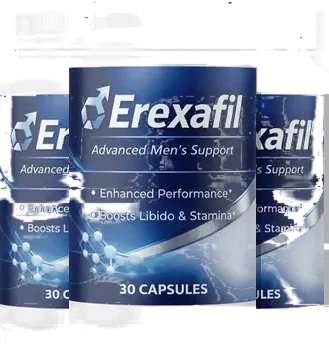
Erexafil's bottle art displays a "GMP CERTIFIED FACILITY" icon. That is a manufacturing-process claim, governed by 21 CFR Part 111, the FDA's Current Good Manufacturing Practice rules for dietary supplements — it concerns how a product is made, documented and handled. It is legally and practically different from independent third-party finished-product testing, which analyzes the actual capsules for identity, potency, heavy metals and microbial contaminants, typically published as a Certificate of Analysis (CoA). As part of this site's own fact-check of Erexafil, no independent third-party lab result or published CoA for this product was located, so the GMP badge alone does not substitute for one.
- GMP Certified Facility badge: a manufacturing-process and facility claim under 21 CFR Part 111.
- Third-party testing: independent finished-product analysis, typically published as a Certificate of Analysis.
- What this site found for Erexafil: the GMP badge is shown on bottle art; no published third-party CoA was located.
Quality badges are everywhere on supplement packaging and sales pages, and they are frequently treated by shoppers as interchangeable proof of "this product is safe and contains what it says." They are not interchangeable, and conflating them is one of the most common, consequential mistakes a supplement buyer can make. This article is a pure regulatory and label-literacy piece, distinct from every other buyer's-guide article on this site: it explains the specific legal meaning of a GMP Certified Facility claim, what independent third-party testing adds on top of that, uses Erexafil's own bottle-art GMP badge as the concrete worked example, and states plainly what this site's own fact-check did and did not find regarding third-party verification for this specific product.
What Erexafil's materials actually show
Erexafil’s bottle art includes a “GMP CERTIFIED FACILITY” icon, and the same badge appears in the footer of this site’s own pages. As part of the fact-checking behind this article, this site’s own review of Erexafil’s available materials found no independent, third-party laboratory test result and no published Certificate of Analysis for this specific product. The manufacturer and facility details behind the GMP claim are also not independently confirmed beyond the bottle icon itself and the “Distributed By” line printed on the label. None of this means the claim is false; it means it is, as printed, an unverified manufacturing-process claim rather than a confirmed, independently tested one, a distinction this article exists to explain.
GMP claim vs. third-party testing, at a glance
| Point | GMP Certified Facility | Third-party finished-product testing |
|---|---|---|
| What it actually covers | Manufacturing process, documentation, facility conditions | The actual finished capsules: identity, potency, heavy metals, microbial contaminants |
| Governed by | 21 CFR Part 111 (FDA Current Good Manufacturing Practice rules) | No single mandatory federal rule; voluntary, performed by an accredited independent lab |
| Who performs it | The manufacturer's own internal process, subject to FDA inspection | An accredited laboratory with no ownership stake in the brand |
| Typical evidence a shopper can request | Facility GMP certification status | A batch-specific Certificate of Analysis (CoA) |
| What this site found for Erexafil | Badge shown on bottle art; facility details not independently confirmed | No published CoA or independent lab result located |
See the full label and current pricing
See every printed ingredient, amount and Daily Value on Erexafil's own Supplement Facts panel, and the current pricing on the official store.
Order ErexafilWhat "GMP Certified Facility" is governed by, and what it actually requires
Current Good Manufacturing Practice (cGMP) for dietary supplements is codified in United States federal regulation at 21 CFR Part 111, administered by the FDA.[1] These regulations set baseline requirements a facility manufacturing, packaging, labeling or holding dietary supplements must follow, covering areas such as personnel qualifications and hygiene, facility and equipment design, production and process controls, component and ingredient specifications, and record-keeping requirements. A facility that is GMP compliant has documented processes, undergoes internal quality checks and is subject to FDA inspection. Critically, 21 CFR Part 111 also addresses how component identity must be confirmed: a manufacturer cannot rely solely on a raw-material supplier's own Certificate of Analysis to verify what a dietary ingredient actually is, and independent confirmation of identity is required as part of a compliant process.[1] This is a genuinely meaningful, legally enforceable set of process standards — it is not a meaningless sticker. What it is not, by itself, is a guarantee about the specific, independently verified contents of any single finished bottle a customer receives, because it governs process and facility, not a public, third-party check of the output.
What independent third-party testing adds on top of that
Independent third-party testing is a separate, voluntary step some brands take beyond baseline GMP compliance: sending finished, packaged product to an accredited laboratory with no ownership or financial stake in the brand, for analysis of the actual capsules a customer would receive. A thorough third-party test panel typically checks several things a GMP process claim does not, on its own, confirm to the public: identity (does the product actually contain the ingredients named on the label, confirmed analytically rather than assumed from a supplier's paperwork), potency (do the ingredients that are individually dosed match their printed amounts within an acceptable tolerance), and contamination screening for heavy metals (such as lead, arsenic, cadmium and mercury) and microbial contaminants (such as harmful bacteria or mold). The result of this kind of testing is typically published as a Certificate of Analysis (CoA), ideally tied to a specific batch or lot number so a shopper can confirm the CoA actually corresponds to the bottle in their hand, not an older or different batch.
It is worth being precise here, because the regulatory guidance on this point is itself a source of consumer confusion: even under 21 CFR Part 111, a manufacturer is not permitted to rely solely on a supplier's own CoA for raw-ingredient identity without independent confirmation, and the same logic extends to why an independent, brand-unaffiliated third-party test of the finished product is considered a stronger form of verification than an internal or supplier-provided document alone.[1] Independent third-party review and testing can supplement a manufacturer's internal controls, but it does not replace or transfer the manufacturer's own underlying regulatory responsibility under 21 CFR Part 111 — the two systems work alongside each other, which is exactly why "GMP certified" and "third-party tested" are not the same claim and are not interchangeable evidence.
Why a badge alone does not substitute for a published result
A "GMP Certified Facility" icon printed on bottle art is, by itself, a claim about the manufacturing process, not a document a shopper can independently check. A genuine third-party test result, by contrast, is a specific, checkable document: it names the testing laboratory, states the methods used, and reports actual results against a defined panel, for a defined batch. This is precisely why a badge and a published CoA are different categories of evidence, not different strengths of the same evidence. A shopper who sees a GMP badge and treats it as equivalent to "this specific bottle was independently tested and confirmed clean" has made a category error that the marketing badge itself does nothing to correct — the badge is accurate as far as it goes, but it goes a shorter distance than many buyers assume.
What a shopper can actually ask a brand for
Turning this into something actionable, a shopper who wants to verify a quality claim beyond a badge can reasonably ask a brand for three specific things: a batch-specific Certificate of Analysis tied to the lot number printed on their own bottle (not a generic, undated document); the name of the accredited laboratory that performed the testing, so the lab's accreditation and independence can be checked separately; and the specific panel the product was tested for (identity, potency, heavy metals, microbial contaminants, or some subset), since "tested" without specifying for what is itself an incomplete claim. A brand that can promptly produce these three things on request has gone meaningfully beyond a facility-level GMP claim. A brand that cannot, or that responds only by repeating the GMP badge, has not.
Three questions worth asking before you buy
“Does the absence of a published CoA mean Erexafil is unsafe?” No — it means independent, publicly checkable confirmation beyond the GMP facility claim was not found as part of this site's fact-check, which is a disclosure gap, not evidence of an actual contamination or potency problem. The honest position is "not independently confirmed," not "confirmed bad."
“Is GMP certification required by law?” Compliance with 21 CFR Part 111's Current Good Manufacturing Practice requirements is a legal baseline for dietary supplement manufacturers in the United States. Publishing an independent third-party CoA, by contrast, is a voluntary step some brands take beyond that legal baseline, not a separate legal requirement in itself.
“Why would a brand skip third-party testing if GMP is already required?” Independent testing costs money and time beyond baseline compliance, and plenty of legitimate, compliant products on the market do not publish one, for reasons ranging from cost to simply not having prioritized it. The absence is a gap worth noting and asking about, not proof of bad faith.
How Erexafil handles this, honestly
Erexafil's bottle art displays a GMP Certified Facility badge, and this article has explained precisely what that claim does and does not cover under 21 CFR Part 111. As part of this site's own fact-check, no independent third-party lab result or published Certificate of Analysis for this specific product was located, and the underlying manufacturer and facility details behind the badge are not independently confirmed beyond what is printed. That is a genuine, worth-noting gap for any shopper trying to verify quality claims beyond the label itself, and it is exactly the gap this article is designed to make legible, using the three-item request list above as a practical next step for anyone who wants to ask the brand directly. For the rest of the formula and the full ingredient-by-ingredient picture, see our Erexafil review of ingredients and cost.
Medical note: this article is general regulatory information, not medical advice, and does not state that any specific batch of Erexafil is contaminated, mislabeled or unsafe. It states what this site's own fact-check did and did not find regarding published third-party verification. Speak with a healthcare professional before starting any supplement.
Scientific references
- 21 CFR Part 111 — Current Good Manufacturing Practice in Manufacturing, Packaging, Labeling, or Holding Operations for Dietary Supplements (eCFR)
- U.S. FDA — Small Entity Compliance Guide: Current Good Manufacturing Practice for Dietary Supplements
- U.S. FDA — dietary supplement labeling and regulation overview
- U.S. FTC — Dietary Supplements: An Advertising Guide for Industry
Related reading
Frequently asked
What does a "GMP Certified Facility" badge actually mean?
It signals that the facility manufacturing the product follows Current Good Manufacturing Practice rules under 21 CFR Part 111, the FDA's regulations covering manufacturing, packaging, labeling and holding operations for dietary supplements. It is a process-and-facility claim, not an independent confirmation of what is actually in a specific bottle.
Is GMP certification the same as third-party testing?
No. GMP compliance concerns how a product is manufactured, documented and handled. Independent third-party testing analyzes the finished product itself for identity, potency, heavy metals and microbial contaminants, typically published as a Certificate of Analysis (CoA) from an accredited, unaffiliated laboratory. A product can be made in a GMP facility without ever publishing a third-party CoA.
Has Erexafil published a third-party lab test or Certificate of Analysis?
No independent third-party lab result or published Certificate of Analysis for this specific product was located as part of this site's own fact-check. The bottle art displays a GMP Certified Facility icon; that claim alone does not substitute for a published third-party test result.
What should I ask a supplement brand for to verify a quality claim?
Ask for a batch-specific Certificate of Analysis tied to the lot number on your bottle, the name of the accredited laboratory that performed the testing, and the specific panel tested for (identity, potency, heavy metals, microbial contaminants). A brand that can produce these on request has gone beyond a facility-level GMP claim.
See the full Erexafil label and current pricing
Compare the full ingredient list, the individually dosed nutrients, and the guarantee on the official store.
Order Erexafil