DHEA for Men: Libido, Benefits and Safety, Explained Plainly
Quick Answer: Is DHEA Worth Taking for Men?
Sometimes, and mostly for older men with genuinely low levels. DHEA for men is a hormone precursor the body can turn into testosterone and estrogen, and it declines with age. Some men with low baseline DHEA see modest libido or erectile benefit; men with normal levels usually see little. Because it is a hormone, testing and medical oversight matter more than the dose.
- Who may benefit: older men with a confirmed low DHEA level.
- Studied dose: commonly 25–50 mg daily, best set with a clinician.
- Key caution: it is a hormone — test your baseline and monitor, do not self-dose open-endedly.
Most of what men take for vitality is a nutrient or a herb. DHEA for men is different, and the difference is the whole point of this article: DHEA is an actual hormone, not a vitamin, and that single fact should change how you approach it. It sits in men's formulas and on pharmacy shelves because it is a precursor your body can convert into testosterone and estrogen, and because it falls steeply as you age. That gives it a plausible story. It also gives it real cautions that a zinc tablet simply does not carry. Let us walk through what DHEA does, who it might help, what a sensible dose looks like, and where the honest limits are.
What DHEA for men is, and what it does in the body
DHEA, or dehydroepiandrosterone, is produced mainly by your adrenal glands and is the most abundant circulating steroid hormone in the body. Its job is to act as a building block. Through a chain of enzymatic steps, the body can convert DHEA into androgens like testosterone and into estrogens. That upstream position is exactly why it attracts interest for male health: give the body more of the raw material, the thinking goes, and it may make more of the downstream hormones that drive libido, energy and muscle. Levels of DHEA peak in your twenties and then decline more or less continuously, so that by your sixties or seventies you are producing a fraction of what you once did. That age curve is the seed of nearly every claim made for it.
The important nuance is that a precursor is not a guarantee. Handing the body more DHEA does not force it to make more testosterone; it depends on your enzymes, your age and how much you were making already. Some of that DHEA can just as easily route toward estrogen. So the honest description is that DHEA supplies potential, and the body decides what to do with it. That is very different from taking testosterone itself.
Who may actually benefit from DHEA
This is where the evidence gets specific, and specificity is your friend. The men most likely to notice something are older men who start with a genuinely low DHEA level. Several studies have explored DHEA in this group, and the more encouraging results — modest improvements in erectile function, mood or well-being — tend to come from men whose baseline was low to begin with. It follows the same fix-the-gap logic that governs a lot of supplementation: you get the most out of a replacement when there is a genuine shortfall to replace.
Conversely, younger men with normal DHEA levels are the group least likely to benefit, and the group most likely to trade a non-existent upside for the risk of hormonal side effects. If your levels are already where they should be for your age, adding more is unlikely to push your testosterone meaningfully higher, and the extra may simply aromatise toward estrogen. This is the single most useful filter to apply before you buy anything: are you plausibly low, or are you well-supplied and hoping for a boost that the biology does not support? For younger men in the second camp, the lever is almost always lifestyle, which is why our guide to increasing libido in men naturally is a better starting point than a hormone.
DHEA at a glance for men
| Point | What the evidence supports |
|---|---|
| What it is | An adrenal hormone and precursor to testosterone and estrogen |
| Age pattern | Peaks in your twenties, declines steadily thereafter |
| Most likely to benefit | Older men with a confirmed low baseline level |
| Least likely to benefit | Younger men with normal levels |
| Common studied dose | 25–50 mg daily, set with a clinician |
| Possible side effects | Acne, oily skin, hair changes, mood shifts, hormonal effects |
Prefer a formula that lists what it contains?
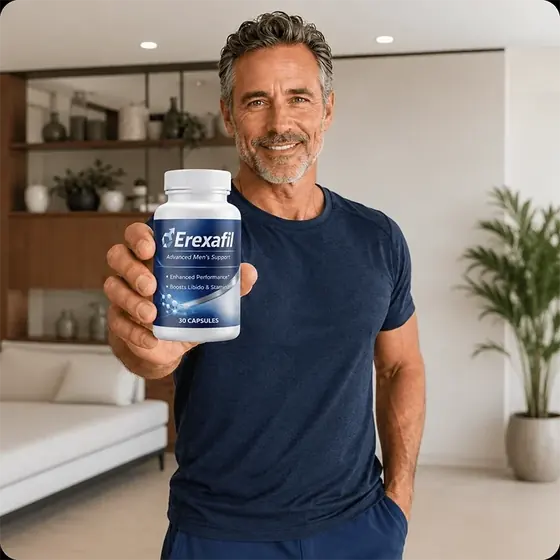
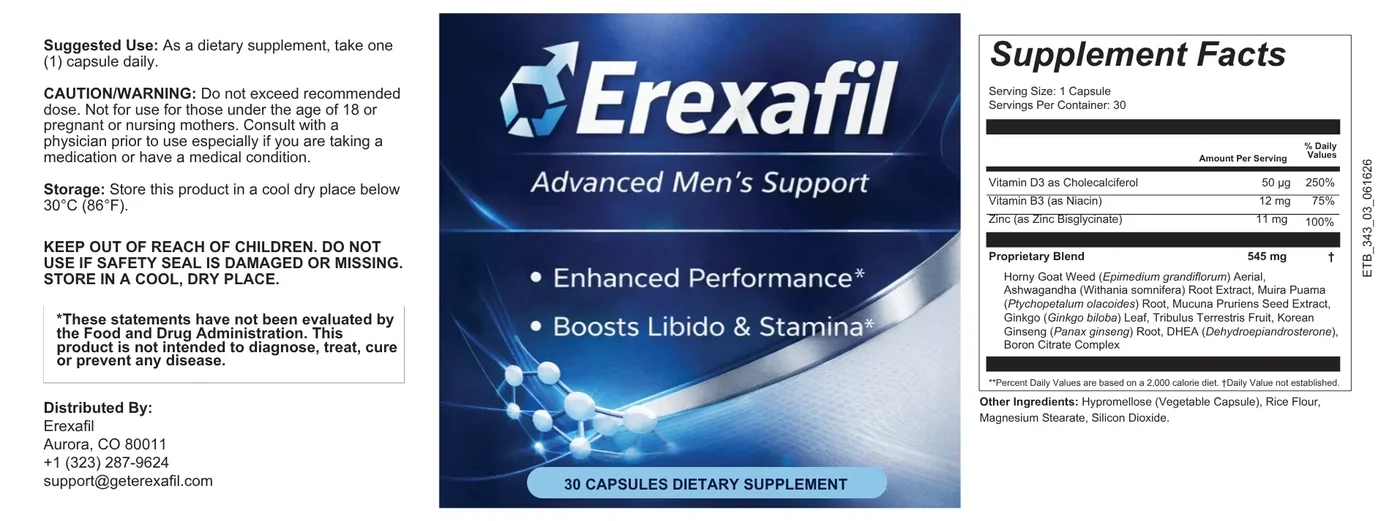
Erexafil is a once-daily men's capsule whose named nutrients — zinc, vitamin D3 and niacin — are printed on the panel, and it does include DHEA, which is exactly why the testing and safety points below matter. See the full label, the options and the guarantee on the official store.
Check Availability & PricingA safe DHEA dose for men, and why testing comes first
The doses used in studies of men have commonly landed in the 25 to 50 mg per day range, and that is where most reputable products sit. You will occasionally see much higher amounts marketed, but higher doses raise the odds of hormonal side effects without a clear payoff, so the studied range is the sensible ceiling, not a floor to climb past. The more important point, though, is sequencing: with a hormone, testing should come before dosing. A simple blood test can show whether your DHEA-sulfate level is actually low for your age. If it is, a clinician can guide a dose and recheck your levels; if it is not, you have just saved yourself money and risk.
Treating DHEA like a hormone rather than a vitamin also means not taking it open-endedly on autopilot. Because it feeds into your sex-hormone system, it deserves periodic monitoring, an honest conversation about how long to stay on it, and attention to how you feel. This is the opposite of the “take it and forget it” mindset that works fine for a multivitamin. The care you apply is part of the safety.
Side effects and safety cautions worth taking seriously
Because DHEA converts into androgens and estrogens, its side-effect profile is hormonal in character. Reported effects include acne and oily skin, changes in body or scalp hair, and shifts in mood or irritability. Since some DHEA can convert to estrogen, that pathway carries its own considerations for men. There are also groups who should be especially cautious or avoid it: anyone with a hormone-sensitive condition, including certain prostate or breast concerns, and anyone on medication that interacts with hormones. DHEA can also affect other lab values, which is another reason a clinician should be in the loop.
One more caution is specific to how DHEA is sold. As a supplement it is not regulated with the tight controls of a prescription drug, so product quality and label accuracy can vary between brands. That makes buying from transparent sources and knowing your dose more important, not less. None of this is a reason for alarm; it is a reason for the ordinary respect you would give any hormone. The framing that keeps you safe is simple: DHEA can help the right man at the right dose under the right supervision, and it can create problems for the wrong man taking it blind.
Three questions men ask before trying DHEA
“Will DHEA just work like a testosterone booster?” Not exactly. A testosterone booster typically works by supporting your own production through nutrients and adaptogens; DHEA is itself a hormone precursor that can convert directly into testosterone or estrogen. That makes it more direct in theory but also more variable and more deserving of monitoring in practice. The two are not interchangeable, and the distinction matters when you read a label.
“If it is natural and declines with age, surely replacing it is harmless?” The “natural” framing is misleading here. A hormone that naturally falls with age is not automatically safe to top up without checking where you actually stand. The safe version of that instinct is to test first and replace only a confirmed shortfall, under guidance, which is a very different action from swallowing a hormone on a hunch.
“Can I just take it for libido and skip the doctor?” You can, but it is the option with the worst risk-to-reward. Low libido has many causes, from sleep and stress to genuinely low hormones to medication side effects, and a hormone is a blunt tool to reach for first. A far more reliable place to start is the pairing of lifestyle and well-studied botanicals, which we cover alongside the herbal evidence in our look at Panax ginseng for erectile support.
How Erexafil handles DHEA, honestly
We publish about Erexafil, so we will be straightforward rather than promotional. Erexafil does contain DHEA, which is precisely why everything above applies to it directly and why we flag it in our disclosures rather than bury it. That inclusion is a double-edged thing worth stating plainly: for an older man with a low baseline, a formula that combines DHEA with libido-relevant botanicals and named nutrients like zinc and vitamin D3 can be a convenient single daily capsule. For a younger man with normal hormones, the DHEA is the ingredient that most warrants a conversation with a clinician before starting, and it is a reason to test rather than assume.
Our position is consistent with the rest of this site: an ingredient can be reasonable for the right person and unnecessary for another, and honesty means saying which is which. If you decide a DHEA-containing daily formula fits your situation and your clinician agrees, Erexafil lists its named nutrients on the panel so you can see what you are getting. If you are not sure you are a candidate, the responsible move is to get your level checked before you buy anything. For the wider ingredient picture and cost, our Erexafil review of ingredients and cost lays out the full formula.
Medical note: this article is general information, not medical advice. DHEA is a hormone. Do not start it without speaking to a healthcare professional, especially if you have a hormone-sensitive condition, a prostate concern, or take any medication. Baseline and follow-up testing are strongly advised, and products in this category, including Erexafil, can contain DHEA.
Scientific references
Related reading
Frequently asked
What does DHEA do for men?
DHEA is a hormone made by the adrenal glands that acts as a precursor, meaning the body can convert it into testosterone and estrogen. Levels peak in your twenties and decline steadily with age. Because it sits upstream of the sex hormones, supplementing it aims to give the body more raw material to work with. Whether that translates into a noticeable effect depends heavily on your starting level, which is why baseline testing is advised.
Can DHEA help with erectile dysfunction?
In some men, modestly, and mainly those with low baseline DHEA. A few studies have reported improved erectile function in men who started with low DHEA levels, while men with normal levels tend to see little benefit. The effect is variable and far weaker than prescription treatment. Erectile difficulty can also signal an underlying condition, so it warrants a clinical assessment rather than self-medicating with a hormone.
What is a safe DHEA dose for men?
Studies in men have commonly used 25 to 50 mg per day, and many products sit in that range. Higher doses raise the risk of hormonal side effects without clear added benefit. Because DHEA is a hormone rather than a nutrient, a safe dose is best set with a clinician after testing your baseline level, and it should not be taken open-endedly without monitoring. There is no single dose that is right for everyone.
Does DHEA raise testosterone?
It can, but the response is inconsistent and depends on your age and starting level. Because DHEA is a precursor, some of it converts to testosterone, and older men with low DHEA may see a rise. It can also convert to estrogen, so the hormonal outcome is not always what people expect. In younger men with normal levels, DHEA has little reliable effect on testosterone. Testing and monitoring are the only way to know.
See how DHEA fits Erexafil's daily formula
If, after testing and a word with your clinician, a DHEA-containing daily men's capsule suits you, Erexafil lists its named nutrients on the panel. Compare the current options and the money-back guarantee on the official store.
See Erexafil on the Official Store